A roof that only leaks during heavy rain usually has a weak spot that normal showers do not expose. In Charlotte, hard downpours and wind-driven rain can push water under lifted shingles, into valleys, behind flashing, through cracked pipe boots, or over clogged gutters. The leak may stop when the storm stops, but the roof opening is still there.
That is the frustrating part. You can have three light rains with no problem, then one noisy afternoon storm comes through and suddenly there is a drip by the hallway light. It feels random. Usually it is not.
Heavy rain changes the rules. Water moves faster, piles up in valleys, blows sideways, and finds tiny gaps around roof details. A small defect that stays quiet most days can show itself only when the weather gets ugly.
If the leak started after a storm, read our guide on what to do when your roof leaks after a Charlotte storm. If the stain is not under the obvious roof damage, this related guide explains why roof leaks can show up far from the entry point.
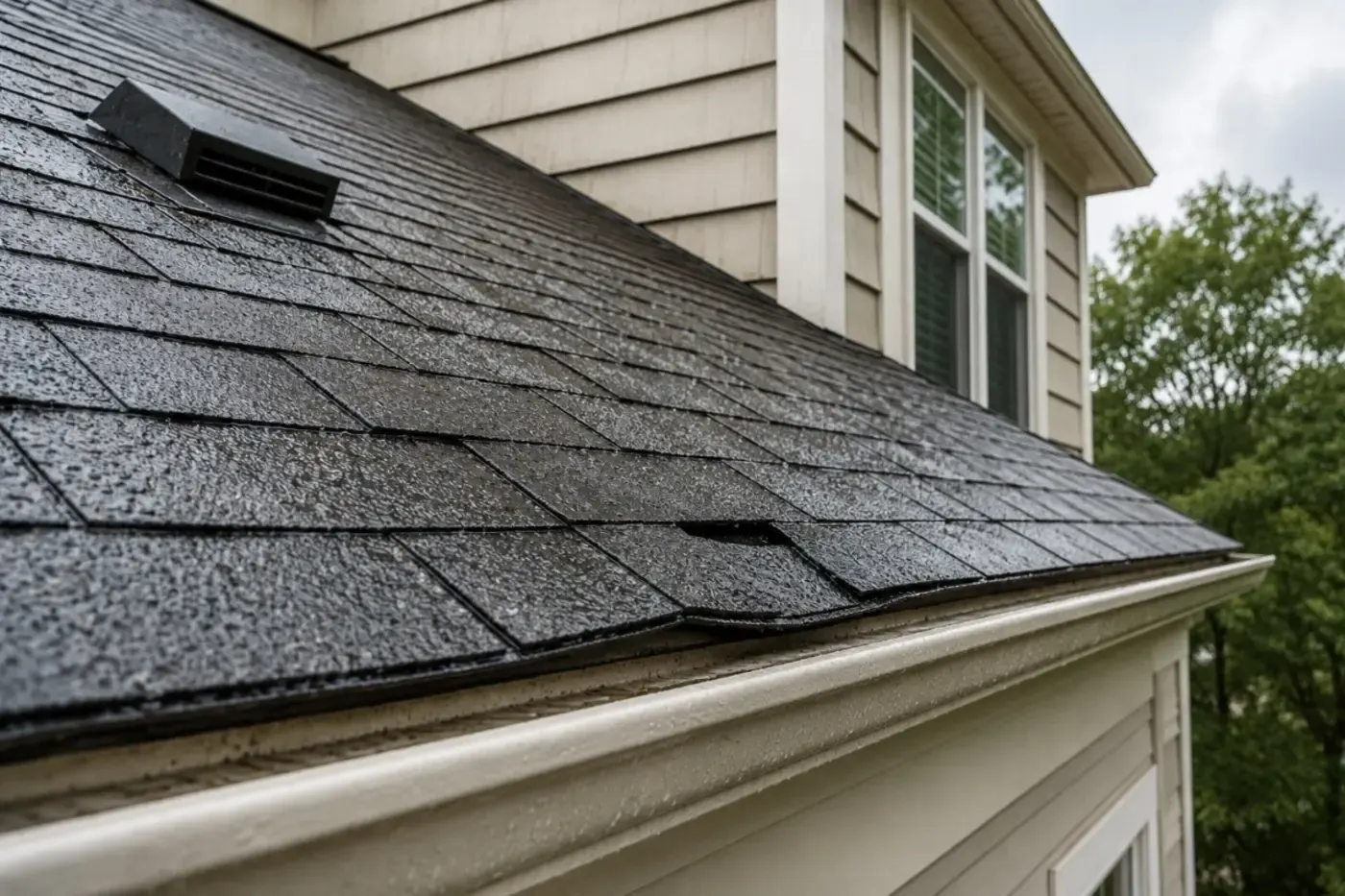
Why Heavy Rain Exposes Roof Leaks That Light Rain Misses
Light rain usually runs where the roof expects it to run: down the shingle field, through the valley, into the gutter, and away from the house. Heavy rain is different. It adds volume, speed, splashback, and pressure. Add wind, and water can move sideways under a shingle tab or behind a flashing edge.
That is why an intermittent leak often shows up during fast Charlotte thunderstorms instead of slow, steady rain. The roof is not necessarily leaking everywhere. It may have one detail that is almost good enough. Heavy rain is what proves it is not.
Another clue is timing. If the leak appears only when rain blows from one direction, the suspect area may be on the wind-facing slope, around a wall transition, or near a roof penetration that catches sideways rain.
Common Reasons a Roof Leaks Only in Hard Rain
Lifted or missing shingles are one of the easy ones to understand. A tab can look mostly flat from the yard, then open just enough under wind pressure for water to get underneath. If you see shingles in the yard after a storm, compare it with our missing shingles guide for Charlotte homeowners.
Flashing failures are another big one. Step flashing, counterflashing, apron flashing, wall flashing, chimney flashing, and dormer flashing all have to move water away from seams. If caulk is doing the job that metal flashing should be doing, heavy rain usually finds out.
Pipe boots and roof vents can crack, split, or loosen over time. Normal rain may run around them. Wind-driven rain can hit the high side of the boot and slip through a small opening. A leak around a bathroom fan, closet, laundry room, or upstairs hallway can sometimes trace back to one of these penetrations.
Valleys carry more water than most other roof areas. Leaves, pine needles, worn shingles, nail placement, or poor underlayment can cause water to slow down and move sideways. When rain is heavy enough, that small valley issue becomes a ceiling stain.
Clogged gutters can also make a roof look guilty when the edge drainage is the real problem. Overflowing gutters can soak fascia, back water toward the eave, and dump water where it was never meant to go. In tree-heavy Charlotte neighborhoods, that matters.
Safe Checks You Can Do Before Calling a Roofer
First, protect the inside of the house. Move furniture, put down a bucket or towel if water is active, and take photos before wiping everything up. Mark the edge of the stain with painter's tape or photograph it with the date. If it grows after the next storm, that is useful evidence.
If you can access the attic safely, use a flashlight and stay on framing. Look for wet insulation, dark streaks on rafters, damp decking, rusty nails, or water beads near a pipe, vent, valley, or wall line. Do not step on drywall. And do not go into the attic during lightning or active severe weather.
Outside, keep both feet on the ground. Binoculars are enough for a first look. Check for lifted shingles, missing shingles, granules in downspouts, debris in valleys, overflowing gutters, cracked vent boots, loose metal flashing, or stains on siding below a roof-to-wall area.
Leak only shows up when Charlotte rain gets heavy?
Request a Free Roof InspectionWhy Charlotte Weather Makes Intermittent Leaks Common
Charlotte gets the kind of weather that makes small roof problems show themselves: quick summer downpours, gusty thunderstorm cells, humid attics, leaf debris, and occasional hail or wind events. A roof can behave during a calm shower in Matthews, then leak during sideways rain in Ballantyne or Indian Trail the next week.
Humidity can also blur the picture. A ceiling spot may be a roof leak, but attic condensation, bathroom exhaust, or poor ventilation can make moisture problems worse. The inspection should check both the outside roof and the attic, not just the shingles you can see from the driveway.
If there was wind, hail, or a fallen limb involved, document the date and any visible damage. Our storm damage roof repair team can inspect the roof, photograph findings, and explain whether the issue looks like storm damage, wear, installation trouble, or drainage.
Does This Need a Repair or a Replacement?
Many heavy-rain leaks can be repaired. A cracked pipe boot, a small flashing gap, a lifted shingle, or debris-packed valley does not automatically mean you need a whole new roof. A targeted repair may be the right move if the surrounding shingles and decking are still in solid shape.
Replacement becomes more likely when the leak is one symptom of a tired roof: brittle shingles, widespread granule loss, recurring leaks in different areas, soft decking, bad ventilation damage, or storm damage spread across multiple slopes. That is where an honest inspection matters. You want a clear reason, not a scare tactic.
Kaliber's approach is simple: find the source, explain what failed, show photos, and talk through repair-first options where they make sense. If replacement is the smarter call, you should know why.
When Should You Call Kaliber?
Call Kaliber if the leak appears during hard rain, comes back after multiple storms, leaves a musty smell, softens drywall, shows up near a light fixture, or follows visible roof damage. Also call if you see shingles, granules, flashing, or tree debris around the house after a storm.
Kaliber Roofing serves Charlotte, Indian Trail, Matthews, Mint Hill, Ballantyne, Pineville, Weddington, Stallings, Monroe, Waxhaw, Concord, Huntersville, Cornelius, Midland, and nearby communities. We inspect the roof and attic, trace the likely water path, and give you a practical plan before the next hard rain tests the same spot again.
Frequently Asked Questions
Why does my roof only leak during heavy rain?
Heavy rain can overwhelm weak spots that stay dry in light rain. Wind can push water sideways under lifted shingles, around flashing, through valleys, behind siding, or into cracked pipe boots. The roof may look fine most days and still leak when rain is hard enough.
Does a leak only during hard rain mean my whole roof is bad?
Not always. Many intermittent leaks come from one failed detail such as flashing, a pipe boot, a valley, a ridge vent, or a lifted shingle. Age, brittle shingles, repeated leaks, or soft decking can point toward a bigger roof problem.
Can clogged gutters make a roof leak only during heavy rain?
Yes. When gutters overflow, water can back up at the roof edge, soak fascia, run behind gutter boards, or find weak spots near eaves. It may not happen during a normal shower, but a heavy Charlotte thunderstorm can expose it fast.
What should I check first if the roof leaks during heavy rain?
Stay off the roof. Photograph the ceiling stain, note the storm date, check the attic only if access is safe, and look from the ground for missing shingles, debris in valleys, cracked pipe boots, loose flashing, or overflowing gutters.
Should I call a roofer if the leak stopped after the storm?
Yes, especially if the stain grew, the drywall softened, you smell musty insulation, or you saw shingles or granules in the yard. Intermittent leaks usually come back because the weak spot is still there.
Does Kaliber Roofing inspect intermittent roof leaks around Charlotte?
Yes. Kaliber Roofing inspects heavy-rain leaks, storm damage, flashing failures, pipe boots, valleys, gutters, attic moisture, decking issues, and related ceiling stains for Charlotte-area homeowners.
Need help finding a heavy-rain roof leak?
Kaliber Roofing can inspect the roof, attic, flashing, shingles, valleys, gutters, and storm evidence so you know what failed before more water gets inside.