Water dripping from a soffit after rain in Indian Trail usually means water is getting behind the normal gutter-and-drip-edge path. The cause might be a clogged gutter, a loose gutter seam, missing drip edge, fascia rot, wind-driven rain, or a roof-edge leak. Do not assume it is only a gutter problem until the roof edge and attic side are checked together.
It is easy to miss at first. The storm passes, the driveway starts drying out, and then you see water still dripping from a soffit panel under the eave. One drip may look harmless. A repeating drip in the same spot is a clue.
Indian Trail homes see hard summer downpours, wind-driven rain, pine needles, leaf debris, and humidity that keeps roof edges damp longer than homeowners expect. Around the eaves, small problems can hide behind gutters and trim until the soffit stains or starts dripping.
Kaliber Roofing approaches this as a roof-edge investigation, not a guess. Sometimes the fix is simple gutter correction. Sometimes it is a targeted roof repair at the drip edge, starter shingles, fascia, or flashing. The difference matters before more water reaches decking, insulation, or the wall.
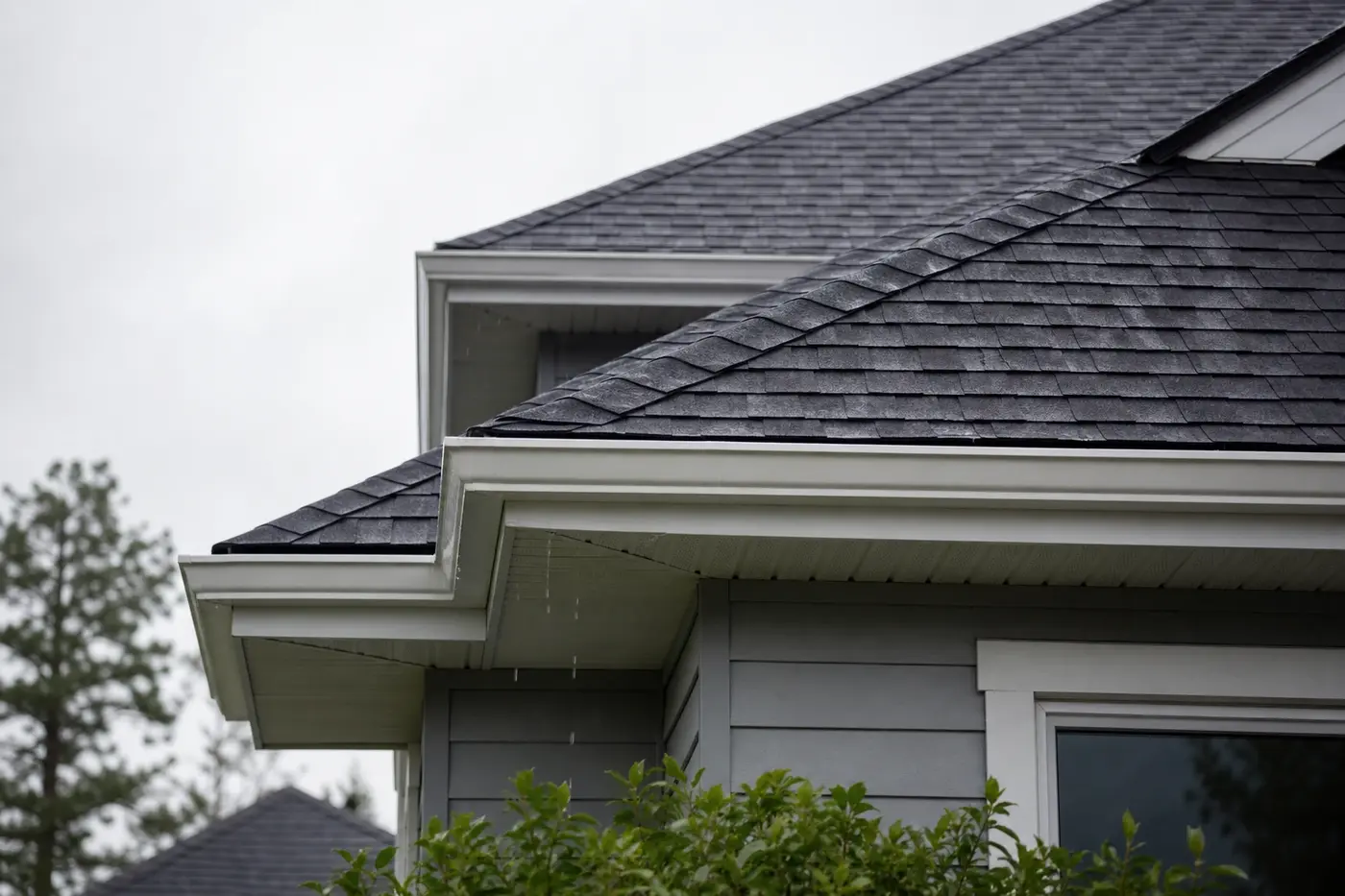
Why Would Water Drip From a Soffit?
The soffit is the finished underside of the roof overhang. It is not supposed to be the drainage path. Rainwater should move down the shingles, over the drip edge, into the gutter, and away from the home.
When water shows up at the soffit, something interrupted that path. The gutter may be full. The drip edge may be missing, short, bent, or tucked wrong. The fascia may be rotted. Wind may be pushing rain under a vulnerable edge. Or water may be entering from a nearby roof detail and traveling down to the eave before it finally escapes.
That last part is why soffit leaks can be frustrating. The visible drip may be several feet away from the actual entry point.
Is It a Roof Leak or a Gutter Problem?
Start with the easy clue: volume. If water pours over the front of the gutter during a hard rain, the gutter system deserves attention first. Clogs, poor slope, undersized downspouts, separated seams, or a gutter pulling away from fascia can all send water where it does not belong.
But not every soffit drip is solved by cleaning gutters. If the gutter is clear and the drip remains in one spot, the roof edge should be inspected. Shingles may not be directing water far enough over the edge. The drip edge may not protect the fascia. Starter shingles may be misaligned. A nearby valley, wall, dormer, or roof-to-gutter transition may be feeding the area.
If the soffit drip comes with ceiling stains, damp insulation, rusty nail tips, or dark roof decking in the attic, treat it like a roof leak until proven otherwise. This guide on rusty attic roofing nails in Indian Trail explains another moisture clue that often shows up near roof-edge leaks.
What Can You Check Safely From the Ground?
Do not climb onto a wet roof or lean a ladder against slick gutters after a storm. Most useful homeowner checks can start from the ground with a phone camera and a flashlight.
Look for a sagging gutter run, water marks on the fascia, dark streaks on the soffit, separated gutter corners, downspouts that are not flowing, shingle edges that look lifted, and debris piled at valleys or roof corners. If you can safely check the attic from an access point, look near the eave for damp insulation, dark decking, water tracks, or musty smells.
Take wide photos and close-ups. Note whether the drip happens during heavy rain, after the rain stops, only with wind, or every time the gutter fills. Those details help separate a simple drainage issue from a roof repair.
Seeing water drip from a soffit or stain the roof edge after rain?
Schedule a Free Roof InspectionCommon Repair Areas Around a Dripping Soffit
The first area is the gutter-to-fascia line. Loose hangers, bad slope, clogged outlets, and open seams can keep water pressed against wood or trim until it finds the soffit.
The second area is the drip edge. Drip edge should help move water into the gutter instead of behind it. When it is missing, short, bent, or installed poorly, water can curl back toward the fascia and soffit. That is especially common during hard Union County rain.
The third area is the roof surface above the drip. A lifted shingle, exposed fastener, valley termination, wall flashing issue, or storm-damaged shingle can start the leak higher up. Water follows framing, underlayment, and trim until the soffit becomes the exit point.
If the wood behind the gutter is soft or the roof decking near the edge is damaged, the conversation may become bigger than a one-hour patch. A documented roof replacement evaluation may be needed when roof-edge damage is part of broader age, storm, or decking problems.
When Should You Call Kaliber?
Call promptly if water drips from the same soffit after every storm, if fascia feels soft, if paint is peeling along the eave, if the attic smells musty, or if interior stains show near the wall or ceiling line. Waiting through another storm cycle can turn a small roof-edge issue into wood rot and drywall damage.
A Kaliber inspection checks the shingles, drip edge, gutter line, fascia, soffit vents, attic moisture clues, nearby flashing, and storm damage evidence. The goal is a clear answer: correct the drainage, repair the roof edge, replace damaged trim, monitor a minor issue, or plan larger roof work only when the condition justifies it.
And if the roof is not the real source, we will tell you. That is the point of looking before selling a bigger fix.
Frequently Asked Questions
Does water dripping from my soffit always mean the roof is leaking?
No. Water at the soffit can come from clogged gutters, loose gutter seams, missing or short drip edge, wind-driven rain, condensation, or an actual roof-edge leak. The pattern after rain and the condition of the fascia, gutter, and roof edge matter.
Why would a soffit drip after the rain has already stopped?
Water can sit inside a clogged gutter, behind the fascia, above a soffit panel, or in wet insulation before it finally finds a gap and drips out. Delayed dripping is a clue that water is being held somewhere, not proof of one specific cause.
Can clogged gutters make water come through the soffit?
Yes. If gutters overflow or back up behind the gutter line, water can wet the fascia, run into the soffit area, stain the eaves, and sometimes reach roof decking or wall cavities. Cleaning may help, but damaged drip edge or rotted fascia still needs repair.
What should I check before calling a roofer?
From the ground, look for overflowing gutters, sagging gutter runs, stains on the soffit, peeling paint on fascia, wet attic insulation near the eave, and whether the drip happens only in one spot or along a longer roof edge. Do not climb a wet ladder or walk the roof.
Does Kaliber Roofing inspect soffit and roof-edge leaks around Indian Trail NC?
Yes. Kaliber Roofing inspects roof-edge leaks, drip edge, gutters, fascia, soffits, attic moisture, shingles, flashing, storm damage, and repair options around Indian Trail, Union County, Stallings, Matthews, Monroe, Waxhaw, Weddington, Mint Hill, and nearby Charlotte-metro communities.
Need a soffit drip or roof-edge leak checked in Indian Trail?
Kaliber Roofing can inspect the gutter line, roof edge, attic clues, and repair options so you know exactly where the water is coming from.