A roof leak around a furnace flue in Indian Trail usually means water is getting past the metal flashing, storm collar, old sealant, rusted fasteners, or shingles around that pipe. It can also be wind-driven rain finding a weak roof penetration during a Union County storm. If the stain is near a closet, hallway, attic chase, or ceiling below the flue, get the roof detail checked before more rain soaks the decking or insulation.
Furnace flues are easy to overlook because they are not as common in roof-leak conversations as pipe boots, skylights, chimneys, or valleys. But they matter. Any pipe that exits through the roof has to be woven into the shingle system so water moves around it instead of under it.
Homes around Indian Trail, Stallings, Matthews, Monroe, Waxhaw, Weddington, and Mint Hill see enough heat, humidity, and sideways summer rain to expose small flashing problems quickly. A flue detail that looked fine last year can start leaking after sealant dries out, metal shifts, shingles age, or a hard storm pushes water uphill for a few minutes.
Kaliber Roofing checks roof penetrations like furnace flues during roof repair inspections, storm damage roof evaluations, and free roof inspection appointments across Indian Trail and the surrounding Charlotte-metro service area.
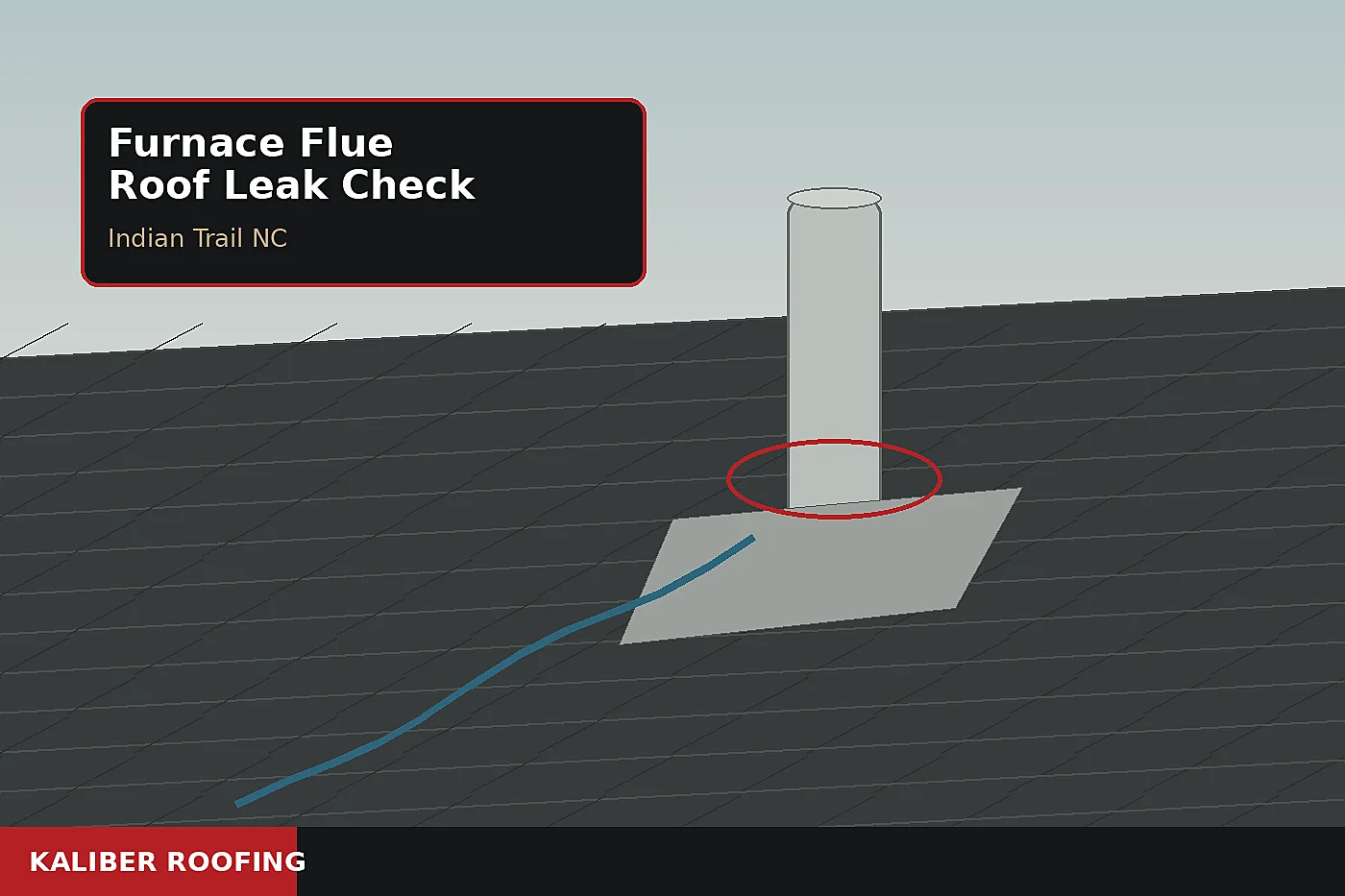
Why Furnace Flues Leak Through the Roof
A furnace flue is a roof penetration. That means shingles, underlayment, metal flashing, and the pipe collar all have to work together. When one piece stops doing its job, rain can sneak below the surface and show up inside the home.
Common trouble spots include a loose storm collar, cracked sealant at the collar, rusted metal flashing, exposed fasteners, lifted shingles, nail holes, poor shingle cuts around the base, or a flue that has shifted over time. Sometimes the original installation was never great. Sometimes age just catches up.
Indian Trail weather does not help. Hot afternoons expand materials. Cooler nights contract them. Humidity slows drying. Then a fast-moving storm pushes rain from the side instead of straight down. Tiny openings become active leak paths.
Warning Signs Around a Furnace Flue
Inside, you may notice a ceiling stain near a hallway, laundry room, utility closet, bedroom, or attic chase. The stain may look brown at the edges, darker after rain, or dry most of the time until a heavy storm hits. A musty smell near insulation is another clue.
From the ground, you might see a tall metal pipe with a crooked cap, dark staining on the roof slope below it, lifted shingles nearby, rust marks, or a collar that looks separated from the pipe. Binoculars help. Climbing onto a wet roof does not.
One important warning: a leak near a furnace flue is not always caused by the flue. Nearby pipe boots, ridge vents, wall flashing, valleys, or old nail holes can send water to the same ceiling area. The inspection has to prove the source.
Is the Flue Really the Source?
Start with timing. Did the stain show up after wind-driven rain? Did it get worse after a storm rolled through Indian Trail, Hemby Bridge, Stallings, or Monroe? Did it appear only once, then go quiet? Those details help narrow the leak path.
Next, look at alignment. If the stain is below the same roof slope as the flue, the flue belongs on the suspect list. But water can travel. A stain that looks “under” the flue may actually be coming from higher up the slope and following framing before it drops.
That is why guessing repairs get expensive. Smearing sealant around the most visible pipe may make the roof look patched while the actual leak keeps moving through the attic. Proof beats guesswork.
What a Roofer Should Check
A good inspection checks the flue pipe, storm collar, flashing base, shingle integration, fasteners, sealant condition, rust, and any movement around the penetration. The roofer should also look at the slope above the flue because water often starts higher than the stain.
The attic matters too. Damp decking, rusty nails, dark water trails, wet insulation, and staining around a chase can show where water entered. If the attic is accessible, those clues are worth their weight.
Safety matters around flues. The roof repair should not crush, disconnect, or improperly alter a combustion vent. If the metal pipe itself is damaged or there is an HVAC safety concern, the roofing repair may need to be coordinated with an HVAC contractor.
Can It Be Repaired, or Does the Roof Need Replacement?
Many furnace flue leaks can be repaired if the problem is localized. That may mean replacing damaged shingles around the penetration, correcting the flashing, addressing a loose collar, replacing failed sealant as part of a proper detail, and checking the deck for moisture damage.
If the surrounding shingles are brittle, curled, storm-damaged, or losing granules across the slope, a small repair may not last. In that case, Kaliber may talk through roof replacement timing instead of patching one weak spot on a roof that is already near the end of its service life.
The honest answer depends on photos, age, shingle condition, attic evidence, and how many other weak areas are showing up. A repair-first recommendation makes sense when the roof still has life left. Replacement makes sense when the flue leak is just one symptom of a larger roof problem.
Seeing a ceiling stain near a furnace flue in Indian Trail?
Schedule a Roof Leak InspectionWhat To Do Next
Take photos of the ceiling stain, attic area if safely visible, and the flue from the ground. Write down when the leak showed up and what the weather was doing. A few notes can save a lot of back-and-forth later.
Do not climb onto the roof to bend metal, pull at the collar, or add hardware-store sealant around the flue. That can make the leak harder to trace, damage shingles, or create a safety issue around the vent pipe.
Then schedule a roof inspection before the next hard rain. Small flue leaks can stay hidden long enough to wet decking and insulation. Catching it early usually keeps the repair simpler.
Frequently Asked Questions
Can a furnace flue cause a roof leak?
Yes. A furnace flue can leak when the metal flashing, storm collar, sealant, fasteners, surrounding shingles, or roof deck no longer shed water correctly. Rust, movement, and wind-driven rain can all expose a weak flue detail.
Is a furnace flue leak the same as a vent pipe leak?
Not exactly. Plumbing vent pipes often use rubber pipe boots, while furnace flues usually involve metal flashing, a collar, and a taller metal pipe. Both are roof penetrations, but the repair details are different.
Can I seal around a furnace flue with caulk?
Caulk may slow a small leak for a short time, but it is not a dependable roof repair by itself. The flue flashing, collar, shingle integration, rust, and attic water path should be checked so the repair does not trap water or hide the real problem.
Should I call a roofer or an HVAC company for a flue leak?
Start with a roofer when the leak is coming through the roof surface around the flashing. If the flue pipe itself is damaged, disconnected, or tied to combustion equipment concerns, the roofer may recommend an HVAC contractor too.
Does Kaliber Roofing repair furnace flue roof leaks near Indian Trail?
Yes. Kaliber Roofing inspects and repairs roof leaks around furnace flues, metal roof penetrations, pipe boots, roof vents, flashing, shingles, and storm-damaged roof areas in Indian Trail, Union County, Stallings, Matthews, Monroe, Waxhaw, Weddington, Mint Hill, and nearby Charlotte-metro communities.
Need help tracing a roof leak around a furnace flue?
Kaliber Roofing can inspect the flue flashing, storm collar, surrounding shingles, attic moisture path, and nearby roof penetrations so you know whether the fix is a focused repair or part of a larger roof issue.