A roof leaking around a dormer in Charlotte NC is usually caused by failed step flashing, loose siding, cracked trim, bad caulk, damaged shingles, or wind-driven rain getting behind the dormer wall. Do not assume the leak is directly above the ceiling stain. Protect the room, take photos, and have the dormer, flashing, siding, and attic line inspected together.
Dormer leaks are sneaky. A dormer is basically a little wall built through the roof, which means water has more places to sneak in: along the sidewalls, under the shingles, around the front corners, behind trim, and sometimes around the window itself.
In Charlotte, those weak spots show up fast after a sideways thunderstorm. One light rain may do nothing. Then a wind-driven storm rolls through Matthews, Ballantyne, Mint Hill, or Indian Trail, and suddenly there is a brown stain on the bedroom ceiling.
The fix depends on where the water is actually entering. Sometimes it is a focused roof repair. Sometimes the roof is fine and the siding or trim around the dormer needs attention. And if the roof is old, brittle, or leaking in several places, it may be time to talk through roof replacement options. The inspection should sort that out before anyone guesses.
Why Roof Dormers Leak
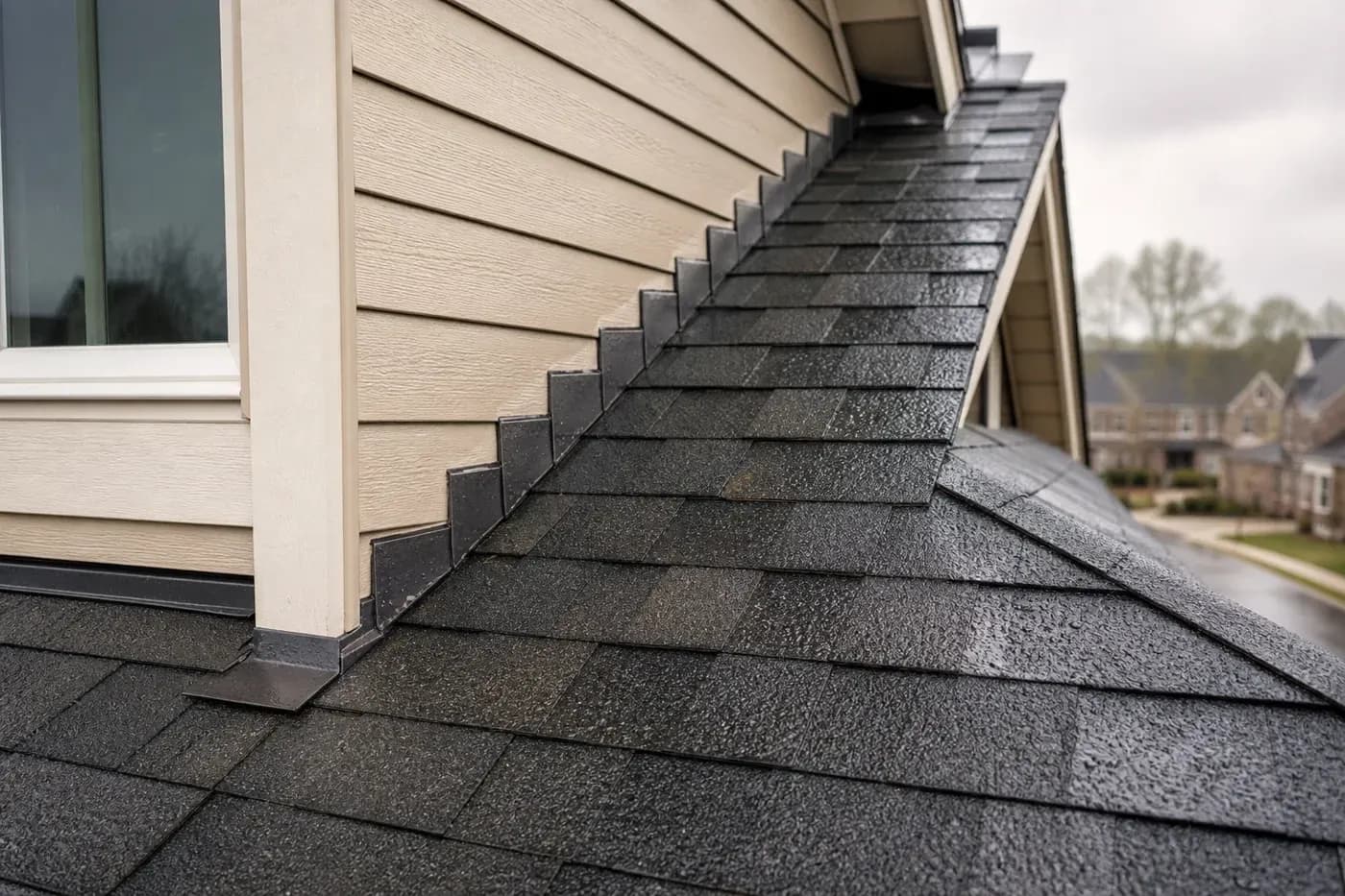
The most common roof-side culprit is step flashing. Step flashing is installed in layers where the roof meets the dormer wall. Each piece should overlap with the shingles so water moves down and out instead of behind the wall. If flashing is missing, rusted, short, poorly lapped, or covered with sloppy sealant, water can work underneath.
Siding can be just as guilty. Water can run behind loose vinyl siding, cracked fiber cement, swollen wood trim, or corner boards with open joints. Once it gets behind the dormer face, it may travel down the wall sheathing and show up inside as what looks like a roof leak.
Windows add another wrinkle. A dormer window with failed exterior caulk, bad flashing tape, or trim gaps can leak during wind-driven rain. The ceiling stain below still feels like a roof problem, but the water may be entering through the wall assembly above the roofline.
Then there is roof age. Older shingles around dormers can curl, crack, lose granules, or stop sealing tight. When that happens near a vertical wall, wind can push rain under the shingle edge and into a vulnerable flashing detail.
Warning Signs Around a Dormer
Inside, look for ceiling stains near an upstairs bedroom wall, damp drywall below a dormer, peeling paint, musty smells, wet insulation, or dark streaks on attic decking. A leak that only appears during wind-driven rain is a classic dormer clue.
From outside, use the ground view first. Look for lifted shingles along the dormer side, missing shingles, loose siding, split trim, exposed nail heads, gaps at the dormer corners, cracked caulk around windows, or debris trapped where the dormer meets the roof.
One important detail: water may not enter where the stain appears. It can run along rafters, dormer framing, wall sheathing, or the underside of the roof deck before it finally stains drywall. That is why a dormer leak needs a roof-and-wall inspection, not a quick glance at one shingle.
If shingles are missing near the dormer after a storm, read our guide on what to do when shingles are missing in Charlotte. The first steps are similar: protect the interior, document the damage, and avoid unsafe roof access.
What You Can Check Safely
During an active leak, deal with the room first. Put down towels or a bucket, move anything valuable, and keep water away from electrical fixtures. If drywall is sagging, do not stand under it. Wet drywall can release without much warning.
If attic access is safe, look near the dormer framing for wet insulation, dark decking, shiny water trails, rusty nail tips, or damp wood. Stay on framing and do not step through insulation. A few clear photos are more useful than trying to play detective in a tight attic during a storm.
Outside, stay on the ground. Take photos of the dormer front, both sidewalls, the roof-to-wall lines, the window, and the gutters or roof below it. If you can capture the area from a second-story window across the house, even better. But skip the ladder if the roof is wet, steep, or high.
Write down the timing too. Did the stain show up after hail? After wind? After a long soaking rain? Only when rain blows from one direction? That kind of detail can save time during the inspection.
Can a Dormer Leak Be Repaired?
Most dormer leaks can be repaired if the surrounding roof and decking are still in good condition. A proper fix may mean removing shingles along the dormer, correcting step flashing, replacing damaged underlayment, repairing a small decking area, and reinstalling shingles so water sheds correctly.
If the problem is siding or trim, the repair may involve sealing or replacing exterior trim, fixing a window-flashing detail, closing a corner-board gap, or correcting the way siding terminates above the roof. That is why the inspection should not stop at the shingles.
What usually does not solve the problem for long? Smearing roof cement or caulk over every visible seam. It might slow water for a season. Or it might redirect water into a worse spot. Dormers need layered water management, not just a black patch that looks busy.
Replacement becomes more likely when the roof is near the end of its life, shingles break apart during repair, decking is soft in several areas, or the dormer leak is one of several active leak points. If that is the case, Kaliber will explain the repair-versus-replacement tradeoff clearly instead of pushing the biggest option first.
Seeing a stain below a dormer after hard rain?
Request a Free Roof InspectionWhat If the Dormer Leak Started After a Storm?
If the leak started right after wind, hail, or falling limbs, document it before cleanup. Take pictures of the interior stain, wet attic materials, missing shingles, lifted tabs, loose siding, dented soft metals, damaged gutters, and debris around the home.
Storm documentation does not mean every leak becomes an insurance claim. Dormer leaks can come from long-term wear, old caulk, poor flashing, or siding issues. But sudden storm damage should be separated from maintenance problems, and photos help.
Kaliber can inspect the dormer, nearby shingles, step flashing, siding transitions, attic moisture, and broader storm clues. If an insurance conversation makes sense, our insurance restoration page explains how we help with documentation and roof-scope clarity.
When Should You Call Kaliber?
Call when a stain grows after rain, the leak appears during wind-driven storms, the attic is damp near a dormer, shingles or siding look loose, or you see repeated water marks in the same upstairs room.
A Kaliber inspection looks at the dormer as a system: shingles, step flashing, roof-to-wall transitions, siding, trim, windows, decking, attic clues, gutters, and storm evidence. That matters because the wrong repair can waste money and leave the leak active.
The goal is simple. Find the real water path, stop it responsibly, and tell you whether a focused repair is enough or whether the roof condition points to a bigger plan.
Frequently Asked Questions
Why does my roof leak around a dormer only during heavy rain?
Dormers have several seams close together: shingles, step flashing, siding, corner boards, trim, and sometimes a window. During heavy or wind-driven Charlotte rain, water can push behind one weak seam even if the roof looks fine during lighter showers.
Is a dormer leak always a roofing problem?
No. A dormer leak can come from roof flashing, but it can also come from siding, window trim, missing caulk, cracked corner boards, or water running behind cladding. A good inspection checks the whole dormer, not just the shingles at the bottom.
Can a dormer leak be repaired without replacing the whole roof?
Often, yes. If the roof is otherwise healthy, the repair may involve correcting step flashing, replacing damaged shingles, sealing or repairing siding transitions, fixing trim gaps, or repairing small areas of soft decking. A full replacement is more likely when shingles are brittle, leaks are widespread, or decking is damaged in multiple areas.
Should I caulk around the dormer myself?
Be careful. Caulk may slow a small trim leak, but it can also trap water or hide a flashing problem. Do not climb onto a steep or wet roof. Document the area from the ground and have the dormer inspected if water is reaching the ceiling or attic.
Can wind damage cause a dormer roof leak?
Yes. Wind can lift shingles near the dormer, loosen flashing edges, drive rain behind siding, or damage trim. If the leak started right after a storm, take photos of interior stains, attic moisture, missing shingles, loose siding, and any debris around the house.
Does Kaliber Roofing inspect dormer leaks around Charlotte?
Yes. Kaliber Roofing inspects roof leaks around dormers, step flashing, shingles, siding transitions, trim, attic moisture, decking, and storm damage around Charlotte, Indian Trail, Matthews, Mint Hill, Ballantyne, Pineville, Weddington, Stallings, Monroe, Waxhaw, Concord, Huntersville, Cornelius, Midland, and nearby communities.
Need a straight answer on a dormer leak?
Kaliber Roofing will inspect the flashing, shingles, siding, trim, attic clues, and storm evidence so you know the right next step.