If your bathroom fan is leaking through the roof in Indian Trail, the problem is usually either rain getting around the roof vent cap or condensation dripping back through the exhaust duct. Rain leaks often come from loose vent flashing, lifted shingles, exposed fasteners, cracked sealant, or wind-driven rain around the vent. Condensation leaks come from warm bathroom air cooling inside a poorly insulated or disconnected attic duct. The fix starts with proving which one you have.
Bathroom fan leaks are easy to misread because the water shows up inside the house first. You see a drip from the fan grille, a brown ring on the ceiling, or damp paint after a storm, and it feels obvious: the roof must be leaking right above the bathroom.
Sometimes it is. Other times the roof vent is fine, but the fan duct in the attic is sweating, sagging, disconnected, or holding water. In Indian Trail and Union County, that difference matters. We get humid summers, fast storms, and enough temperature swings that both rain leaks and condensation leaks can show up in the same bathroom.
Kaliber Roofing checks roof vent penetrations during roof repair inspections, storm damage roof evaluations, and free roof inspection appointments across Indian Trail, Stallings, Matthews, Monroe, Waxhaw, Weddington, Mint Hill, and nearby Charlotte-metro communities.
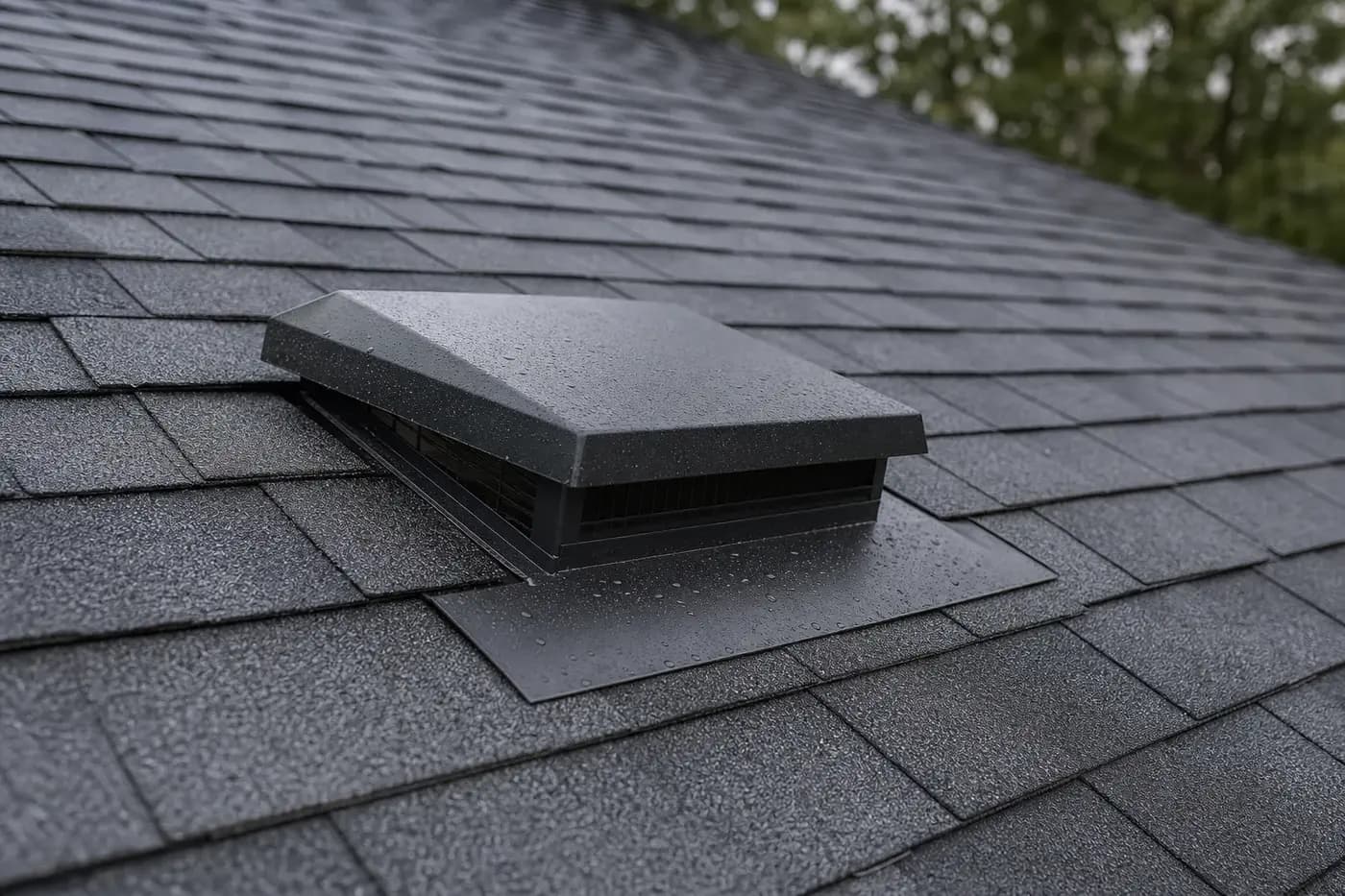
Why Bathroom Fan Roof Vents Leak
A bathroom fan normally pushes damp indoor air through a duct and out a roof vent cap. The roof part has to shed rain. The attic part has to move moist air outside without letting it cool, condense, and run backward.
On the roof, leaks can start when the vent flashing is bent, cracked, nailed wrong, sealed poorly, or tucked into the shingles incorrectly. The shingles around the vent can also lift after wind, lose granules, crack, or open a small path that sends water under the flashing.
That small opening may not leak during every rain. Wind matters. If a storm pushes rain sideways through Indian Trail, Hemby Bridge, Stallings, or Monroe, water can find a vent detail that looked fine during a calm shower.
There is also the duct side. If the fan duct runs through a hot, humid, or cold attic without enough insulation, warm bathroom air can turn into water inside the pipe. If the duct sags, that water can sit there until it drips back through the fan housing. Annoying? Very. But it is a different repair than a roof leak.
Is It Rainwater or Condensation?
Start with timing. If the fan drips only after rain, especially after windy rain, the roof vent and flashing need a hard look. If it drips after long showers, during colder weather, or when the fan has been running a while, condensation moves higher on the suspect list.
Look at the stain too. A roof leak may leave a spreading ceiling stain around the fan or nearby drywall. Condensation may show as repeated small drips from the fan cover, rust on the grille screws, or dampness that appears even when there has not been a storm.
Do not rely on one clue by itself. Water travels. A leak around the roof vent can run down the outside of the duct. Condensation can make it look like the roof failed. The attic usually tells the truth: wet decking, rusty nails, damp insulation, duct sweating, or a disconnected duct can point the inspection in the right direction.
Warning Signs You Should Not Ignore
A little drip from a bathroom fan is not something to shrug off. Watch for a ceiling stain around the fan, bubbling paint, a musty smell, wet attic insulation, rusty fan parts, dark roof decking near the vent, or shingles that look lifted around the cap.
Outside, you may be able to see a crooked vent cap, cracked sealant, missing shingles nearby, or debris piled against the vent. Use binoculars from the ground if you want a closer look. Do not climb onto a wet roof to check a small leak. That is how small roofing problems turn into emergency room stories.
If the drip follows a recent storm, take photos and write down the storm date. If the drip follows showers, note how long the fan ran and whether the attic duct is visible from a safe access point. Those details help separate a roofing repair from a ventilation or ducting issue.
What a Roofer Should Check
A useful inspection starts with the leak pattern. Did it happen during wind-driven rain? After every shower? Only in the winter? Only during summer downpours? The timeline narrows the list fast.
In the attic, the inspector should check the bathroom fan duct, duct slope, insulation, connection points, roof decking around the vent, damp insulation, nail rust, and any water tracks. If the duct is disconnected or sweating, you do not want a roofer selling you a roof repair that will not stop the drip.
On the roof, the vent cap and flashing should be checked up close. That means the shingle laps, nail placement, seal points, storm damage around the penetration, nearby lifted tabs, and whether water can be driven under the vent during hard rain.
Then the surrounding roof gets checked too. Pipe boots, ridge vents, wall flashing, valleys, and lifted shingles can send water to the same ceiling area. A good inspection proves the path instead of blaming the nearest vent.
Can It Be Repaired, or Does the Roof Need Replacement?
Many bathroom fan roof leaks are targeted repairs. The vent cap may need to be replaced. The flashing may need to be corrected. Nearby shingles may need repair. Exposed fasteners may need proper attention. If the roof deck is dry and the surrounding shingles still have life, the repair can often stay focused.
If the leak is tied to older brittle shingles, widespread storm damage, soft decking, or several roof penetrations failing at once, the conversation changes. At that point a focused repair may buy time, but a bigger roof replacement plan may be the cleaner long-term answer.
Condensation repairs are different. They may involve reconnecting the duct, insulating it, correcting the slope, improving the fan setup, or making sure the exhaust actually terminates outside. That is why the diagnosis has to come first. Guessing gets expensive.
Seeing water drip from a bathroom fan after rain in Indian Trail?
Schedule a Roof Vent Leak InspectionWhat To Do Next
Take photos of the fan cover, ceiling stain, and any safe attic view you can access. Write down whether the drip happened after rain, after a shower, during cold weather, or after a storm with strong wind.
If water is actively dripping, protect the bathroom floor and ceiling area, but do not remove electrical parts or climb on the roof. Turn the fan off if you suspect water is entering the fan housing and call a qualified pro if there is any electrical concern.
Then get the roof vent and attic duct checked before the next storm cycle. A small vent leak can soak insulation and decking quietly. A condensation issue can keep coming back until the duct is corrected. Either way, the sooner you know which one it is, the easier the repair conversation gets.
Frequently Asked Questions
Why is water dripping from my bathroom fan after rain?
If the dripping starts after rain, the roof vent cap, flashing, lifted shingles, exposed nails, or storm-driven rain around the vent are common suspects. Condensation can also drip from the fan housing, so the attic duct and roof penetration both need to be checked before anyone guesses.
Can a bathroom exhaust roof vent leak be repaired?
Often, yes. A roofer may be able to replace or reseal the vent cap, correct the flashing, repair nearby shingles, secure the fasteners, or fix a small decking issue. If the surrounding shingles are brittle, storm-damaged, or leaking in several areas, replacement may need to be discussed.
How do I know if it is condensation instead of a roof leak?
Condensation is more likely when the bath fan drips during cold weather, long showers, or when the duct is poorly insulated or disconnected in the attic. A rain leak is more likely when the drip follows storms, wind-driven rain, or visible staining around the roof vent penetration.
Should I caulk around the bathroom roof vent myself?
Do not smear caulk around the vent from the roof. Caulk can hide the water path, fail quickly, and sometimes trap water under shingles. The vent, flashing, fasteners, shingles, and attic duct should be inspected as one system.
Does Kaliber Roofing repair bathroom fan roof vent leaks near Indian Trail?
Yes. Kaliber Roofing inspects and repairs roof leaks around bathroom exhaust vents, roof vent caps, pipe boots, flashing, shingles, and storm-damaged roof penetrations in Indian Trail, Union County, Stallings, Matthews, Monroe, Waxhaw, Weddington, Mint Hill, and nearby Charlotte-metro communities.
Need help tracing a bathroom fan roof leak?
Kaliber Roofing can inspect the roof vent cap, flashing, nearby shingles, attic moisture path, and storm clues so you know whether the fix is a roof repair, a duct issue, or part of a larger roof problem.