A roof that leaks during wind-driven rain in Indian Trail usually has a weak point where water can be pushed sideways or uphill: roof-to-wall flashing, pipe boots, chimney flashing, lifted shingles, vents, dormers, or clogged roof-edge drainage. Normal rain may run over the same area without a problem. Sideways Union County rain exposes the gap.
That is the frustrating part. The ceiling can stay dry through a regular shower, then stain during one hard storm that blows rain against the house from the wrong direction. Homeowners naturally think, “If the roof is leaking, why does it not leak every time?”
The answer is pressure and angle. Wind changes how water moves. It can drive rain under a loose shingle tab, behind siding, around a pipe boot, into a chimney shoulder, or along a wall flashing seam that only fails when the storm hits just right.
Kaliber Roofing helps homeowners with roof leak repairs, storm damage roof inspections, and roof inspection scheduling across Indian Trail, Union County, Stallings, Matthews, Monroe, Waxhaw, Weddington, Mint Hill, and nearby Charlotte-metro communities.
Why Wind-Driven Rain Finds Leaks
Roofs are built to shed water downhill. Shingles overlap, flashing redirects water, and gutters move runoff away from the edges. In normal rain, that system usually works because gravity is doing most of the work.
Wind changes the game. During a strong Indian Trail thunderstorm, rain can hit the roof and walls at an angle. It can splash under an edge, blow against vertical siding, or push into a tiny opening that never gets tested during a calm rain.
That is why these leaks can feel random. They are not random. They just need the right combination of rain volume, wind direction, and a weak detail.
Common Places Wind-Driven Rain Gets In
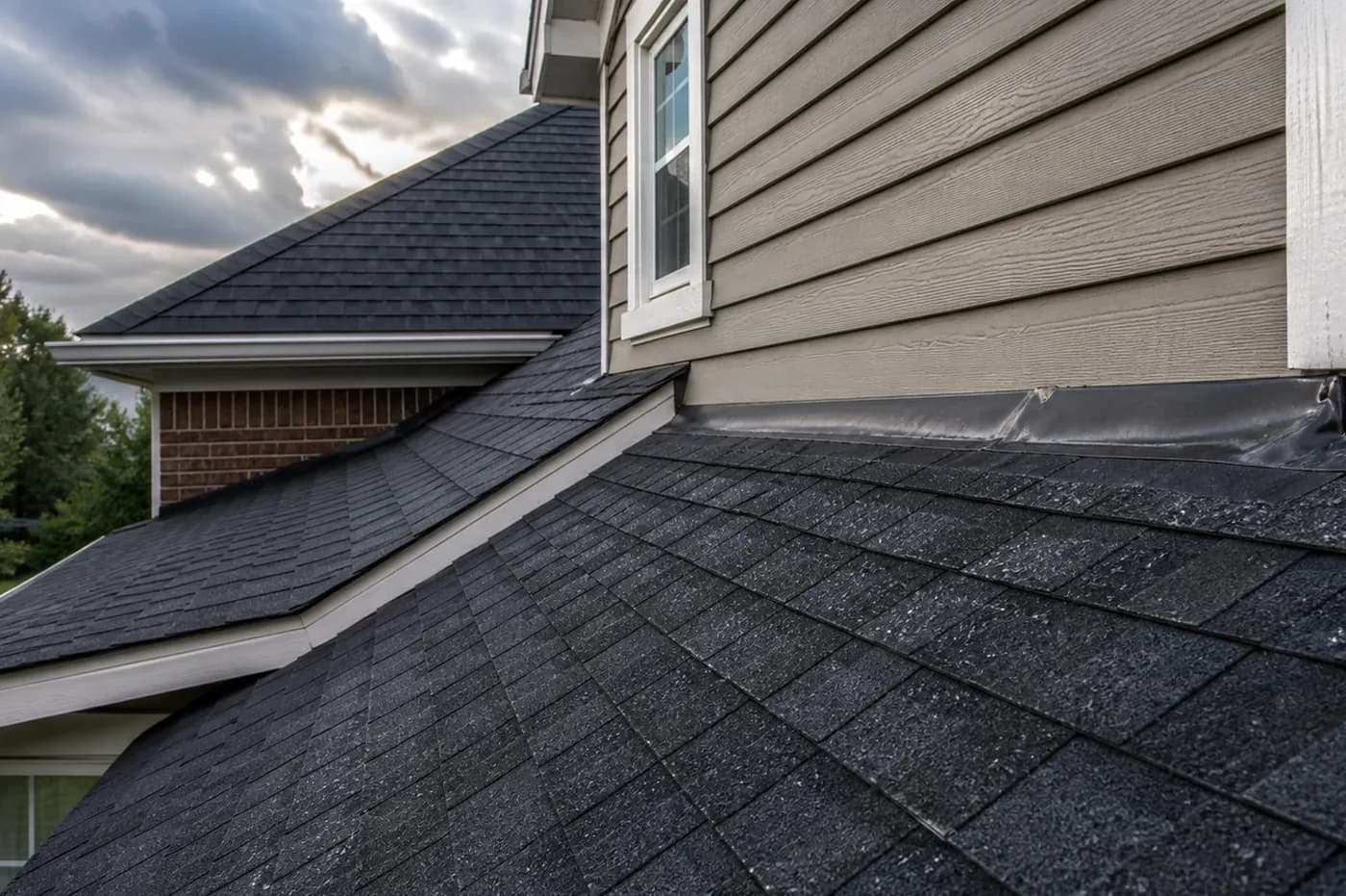
Roof-to-wall flashing is one of the first places to check. When shingles meet siding, step flashing and kick-out flashing have to move water away cleanly. If flashing is missing, short, rusted, buried behind caulk, or installed wrong, sideways rain can sneak behind it.
Pipe boots and roof vents are another common culprit. Rubber boots crack in the sun. Metal vents can loosen. A small gap around a fastener may stay quiet until wind pushes water across the roof instead of down it.
Chimneys, dormers, and skylight-style transitions need careful flashing because they interrupt the roof plane. Corners are especially fussy. Water loves corners.
Lifted shingles can also leak under wind pressure. A tab that looks settled from the yard may have lost its seal. When gusts lift it, rain can get underneath and work toward nail holes or seams.
Clogged gutters and roof-edge drainage can make things worse. If water backs up at the edge, spills behind gutters, or soaks fascia, the leak may show inside near an exterior wall even though the entry point starts outside the living space.
Safe Checks You Can Do Before Calling
Start inside. Take photos of the ceiling stain, wall stain, wet trim, or water drip. Include one close-up and one wider photo so the location is obvious. If water is actively dripping, protect the floor and move furniture before anything else.
If you can safely access the attic, look for wet decking, dark trails on rafters, damp insulation, or daylight around penetrations. Do not step off framing. Attic drywall will not hold you.
Outside, stay on the ground. Look for missing shingles, lifted tabs, loose flashing, gutter overflow, downspout granules, bent metal, or debris piled in a valley. Write down the storm date and the direction the rain seemed to hit the house. That little detail can help during the inspection.
Roof only leaks when the rain blows sideways?
Schedule a Roof Leak InspectionShould You Wait Until It Leaks Again?
No. Waiting for the next leak is how small problems turn into decking, insulation, drywall, and paint repairs. If wind-driven rain found a path once, it can usually find it again.
That does not mean you automatically need a new roof. Plenty of wind-driven rain leaks are targeted repairs: a pipe boot, flashing correction, shingle repair, gutter-edge fix, or storm-damage repair. The goal is to find the actual entry point instead of guessing.
And if the roof is older, brittle, or has several weak areas, the inspection can help you weigh repair versus replacement honestly. A good recommendation should explain why, with photos you can understand.
What a Roofer Should Inspect
A proper wind-driven rain inspection should include more than the stain location. Water can travel. The entry point may be several feet away from where it appears inside.
The roofer should check the roof slope above the leak, the nearest wall transitions, pipe boots, vents, chimney or dormer flashing, valleys, ridge caps, gutter edge, fascia, siding tie-ins, and attic evidence if there is access. Photos should show both the concern and the recommended fix.
That matters around Indian Trail because storms can be uneven. A home near Stallings may get hard wind from one direction while another pocket closer to Monroe gets mostly heavy rain. Local context helps, but the roof still needs a detail-by-detail inspection.
If your roof leaked during a recent Union County storm, get it checked while the stain, attic moisture, and storm timeline are still fresh. It is easier to solve now than after the next sideways rain.
Frequently Asked Questions
Why does my roof only leak when rain is blowing sideways?
Wind-driven rain can push water uphill, sideways, and behind trim, siding, flashing, vents, or lifted shingles. A roof may look fine in a normal shower but leak when a Union County storm drives rain against weak details.
Is a wind-driven rain leak always a roof problem?
Not always. The leak can come from roof flashing, a pipe boot, a wall transition, a chimney, siding, a window, or clogged roof-edge drainage. The inspection should trace the water path instead of assuming the shingles are the only issue.
Can I seal a wind-driven rain leak myself?
Caulk or roof cement may slow a small exterior gap for a short time, but it can also hide the real entry point. If water reached the ceiling, attic, decking, or insulation, have the area inspected before relying on a quick sealant patch.
Should I file an insurance claim for a wind-driven rain roof leak?
Do not file only because water came in. First document the leak, protect the interior, and get a roof inspection. If the roofer finds storm-created damage such as lifted shingles, torn flashing, or impact damage, the documentation can help you decide next steps.
Does Kaliber Roofing inspect wind-driven rain leaks near Indian Trail?
Yes. Kaliber Roofing inspects roof leaks and storm-related roof damage in Indian Trail, Union County, Stallings, Matthews, Monroe, Waxhaw, Weddington, Mint Hill, and nearby Charlotte-metro communities.
Need a leak traced after wind-driven rain?
Kaliber Roofing can inspect the roof, document the likely entry point, and explain whether a targeted repair or bigger roof conversation makes sense.