If a tree limb hit your roof in Charlotte NC, stay off the roof, check for active leaks from inside, photograph the damage before cleanup, and schedule a roof inspection quickly. Even a limb that looks small from the yard can lift shingles, bruise the roof surface, puncture decking, or create a leak that shows up during the next hard rain.
It is tempting to treat a branch on the roof like yard debris. Grab it, toss it down, move on. But roofs are not patios. A limb can scrape granules, break a shingle seal, bend flashing, or hide a puncture under leaves.
Charlotte's tree cover makes this a common storm call, especially after fast thunderstorms in neighborhoods around Matthews, Mint Hill, Indian Trail, Weddington, Waxhaw, Huntersville, and Cornelius. One gust. One limb. Then you are wondering whether the roof is fine or one storm away from a ceiling stain.
If water is already coming in, start with our guide on what to do when your roof leaks after a Charlotte storm. If shingles are missing or lifted, this related guide explains what to do when shingles are missing from your roof.
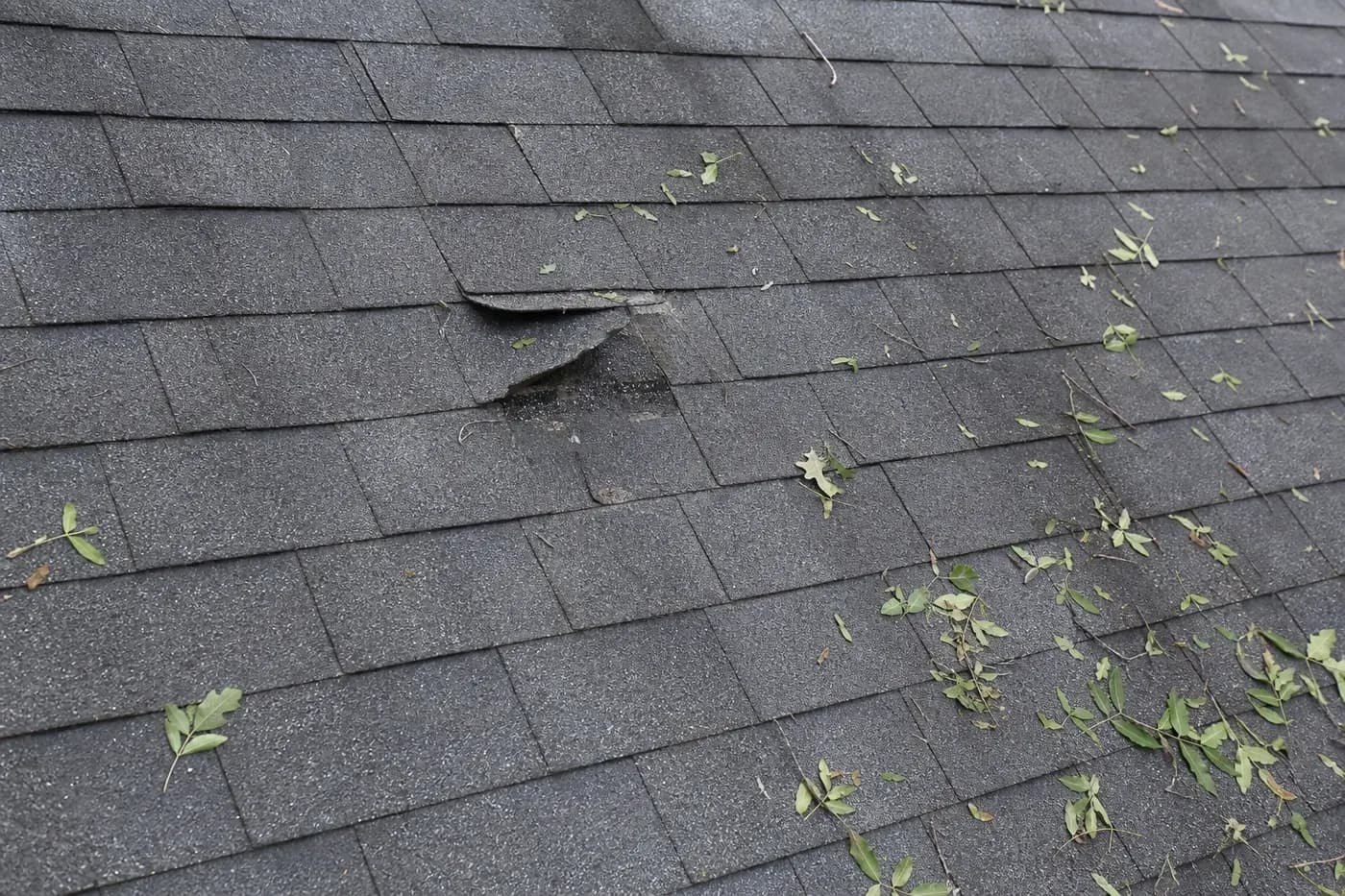
First Steps After a Tree Limb Hits Your Roof
First, make sure nobody is under the damaged area if water is dripping, drywall is sagging, or a ceiling light is involved. Move furniture and valuables away from the leak path. Put a bucket or towel down if water is active, but avoid touching wet electrical fixtures.
Next, take photos. Start wide: the limb, the roof slope, the yard, the gutter line, and any debris on the ground. Then take close photos from the ground or a safe window if you can. Inside, photograph ceiling stains, wet flooring, attic moisture, and any water path you can see.
If the limb is large, heavy, tangled in the roof, sitting near a power line, or looks like it punctured the roof, stop there. Let a professional handle removal and inspection. Seriously. Saving a few minutes is not worth tearing more shingles or getting hurt.
Roof Damage Signs to Watch For
Lifted shingles are a big clue. A limb can catch the edge of a shingle and break the adhesive seal. The tab may settle back down, so the roof can look almost normal from the driveway while still being vulnerable to wind-driven rain.
Granule loss can show up as bald-looking spots, fresh dark patches, or piles of grit in the gutter and downspout. Granules protect asphalt shingles from sun and weather. A scraped area may age faster even if it is not leaking today.
Punctures and soft spots are more urgent. If a limb punched through shingles, underlayment, or decking, water has a direct path in. Sometimes the opening is hidden under debris or a folded shingle, which is why a documented inspection matters.
Moved flashing or gutter damage can also cause trouble. Branches can loosen metal around walls, chimneys, valleys, drip edge, or roof edges. Gutters can pull away from fascia and send water behind the roof edge instead of away from the house.
Safe Checks You Can Do Without Getting on the Roof
Use phone zoom or binoculars from the ground. Look for shingles that are missing, folded, cracked, lifted, or darker than the surrounding area. Also check for leaves packed into a valley, twigs stuck under shingle edges, or gutter sections hanging lower than normal.
If attic access is safe, use a flashlight and stay on framing. Look below the impact area for damp insulation, dark decking, water beads on nail tips, musty smells, daylight, or fresh stains on rafters. Do not step on drywall. Do not go into the attic during lightning or active severe weather.
Then write down the timing. When did the storm hit? Was there wind? Did hail come through? Was the limb from your tree or a neighbor's tree? Those details help the roof inspection and may matter if you talk with your insurance carrier.
Tree limb hit the roof during a Charlotte storm?
Request a Free Roof InspectionInsurance Documentation: What to Save
When roof damage comes from a sudden storm event or falling debris, documentation matters. Save photos of the limb before removal, the damaged roof area, any interior water, temporary tarping, cleanup, and receipts. If shingles, flashing, or gutter pieces fell to the ground, photograph them before tossing anything.
A roofer cannot promise coverage. That decision belongs to your insurance carrier and policy. What a roofer can do is inspect the roof, photograph the condition, explain what appears damaged, and separate visible storm impact from age, wear, maintenance, or older roof problems.
If there is active water entry, preventing more damage comes first. A temporary dry-in or tarp may be appropriate, but it should be done carefully. Our storm damage roof repair team can inspect impact damage, document findings, and help you understand the practical next step.
Does Tree Limb Damage Mean Repair or Replacement?
Often, it is a repair. A small impact area, a few lifted shingles, a localized puncture, or a damaged roof edge can sometimes be fixed without replacing the entire roof. The surrounding shingles, decking, underlayment, roof age, and leak history all matter.
Replacement becomes more likely when the limb damage exposes a bigger problem: brittle shingles, widespread granule loss, multiple slopes with storm damage, soft decking, repeated leaks, or a roof already near the end of its life. In that case, patching the obvious spot may not solve the actual risk.
Kaliber's repair-first approach is simple. Find the source, show photos, explain the options, and recommend replacement only when the roof condition justifies it. No scare tactic. No mystery estimate.
When Should You Call Kaliber?
Call Kaliber if a limb hit the roof, shingles look lifted or missing, water is entering, the attic smells musty, gutters pulled loose, a valley is packed with branches, or you are not sure whether the roof was punctured. Also call if the limb hit near a chimney, wall, dormer, skylight, ridge, pipe boot, or roof edge. Those details can leak in sneaky ways.
Kaliber Roofing serves Charlotte, Indian Trail, Matthews, Mint Hill, Ballantyne, Pineville, Weddington, Stallings, Monroe, Waxhaw, Concord, Huntersville, Cornelius, Midland, and nearby communities. We inspect tree limb damage, storm damage, shingles, flashing, gutters, attic moisture, and decking so you know whether the roof needs a targeted repair, temporary dry-in, or a bigger plan.
Frequently Asked Questions
What should I do first if a tree limb hit my roof?
Stay off the roof, make sure everyone is safe, photograph the limb and any interior leaks, move belongings away from water, and call a roofer if the roof may be punctured or actively leaking. Do not pull a heavy limb off the roof yourself.
Can a small branch damage asphalt shingles?
Yes. A small limb can bruise shingles, break the seal, lift tabs, crack ridge caps, knock granules loose, or expose nail holes. The damage may not leak right away, but the next hard Charlotte rain can reveal the weak spot.
Should I tarp the roof after tree limb damage?
A tarp may be needed if water is entering, shingles are missing, decking is exposed, or a puncture is visible. Tarping should be treated as temporary leak control, not the repair. It also needs to be installed carefully so it does not create extra holes.
Will homeowners insurance cover tree limb roof damage?
It may be covered when the damage comes from a sudden event such as wind or falling debris, but coverage depends on the policy, cause, deductible, roof condition, and documentation. A roofer can document roof damage; your carrier decides coverage.
Can I wait if there is no ceiling leak yet?
Waiting is risky if shingles are lifted, granules are missing, flashing moved, or decking may be punctured. Some limb damage lets water under the roof surface before it reaches the ceiling, so an inspection is smart before the next storm.
Does Kaliber Roofing inspect tree limb roof damage around Charlotte?
Yes. Kaliber Roofing inspects tree limb impact, storm damage, missing shingles, lifted shingles, roof leaks, decking concerns, and emergency dry-in needs for Charlotte-area homeowners.
Need a tree limb roof damage inspection?
Kaliber Roofing can inspect the roof, attic, shingles, flashing, gutters, and storm evidence so you know what happened before more water gets inside.