Yes, you may need to tarp your roof after a Charlotte storm if water is actively getting inside, shingles are missing, a branch punctured the roof, or the leak cannot be repaired right away. But do not climb onto a wet or steep roof yourself. Protect the room, take photos, call a roofer, and use a tarp only as temporary protection until the real roof damage is inspected and repaired.
Roof tarping sounds simple until you are standing in the driveway after a hard summer thunderstorm, looking at a ceiling stain and trying to decide whether this is an emergency. Around Charlotte, that situation usually follows wind, hail, fallen limbs, or one of those sideways rains that finds every weak spot on an older roof.
The short version: stop the interior damage first. Then document what happened. Then get the roof checked. A tarp can buy time, but it is not a magic fix, and a badly installed tarp can cause its own problems.
If the leak started after wind or hail, compare this guide with our Charlotte storm roof leak steps. If shingles are gone, our guide on missing shingles in Charlotte covers what to photograph and what to avoid before a roofer arrives.
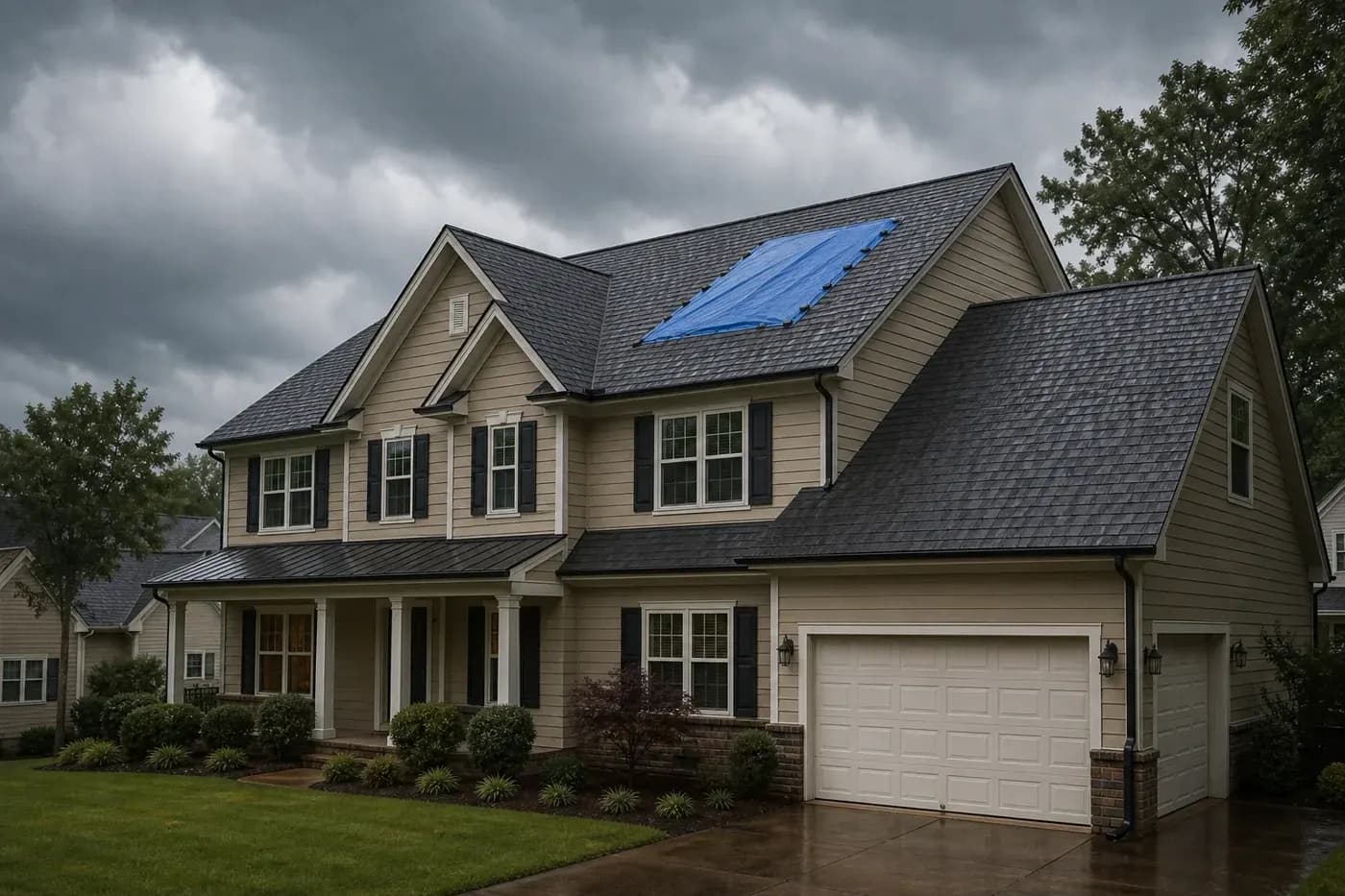
When Roof Tarping Makes Sense
A tarp makes sense when there is an opening or weak area that is letting rain into the house and the permanent repair cannot happen immediately. Common examples include missing shingles after wind, a tree limb puncture, storm-torn flashing, a leaking roof valley, or a damaged slope that needs to stay dry until inspection.
It is also useful when rain is still in the forecast. Charlotte weather can stack storms back-to-back in spring and summer. If your ceiling is already wet and another round is expected tonight, temporary dry-in protection can reduce damage to insulation, drywall, flooring, and belongings.
That said, tarping is not always the right first move. If the water is coming from a plumbing line, condensation, siding, a window, or a chimney detail, covering a random section of shingles may not help. A targeted inspection matters because water does not always enter directly above the stain.
When You Should Not Tarp the Roof Yourself
Do not climb the roof if it is wet, steep, high, covered in debris, or damaged by a falling limb. Also stay off the roof if storms are nearby, if power lines are involved, or if you would need to walk on brittle shingles. A tarp is not worth a fall.
Even on a lower slope, temporary tarping has to shed water the right way. If the tarp is too short, fastened poorly, tucked under the wrong edge, or installed where water can pond, it may leak again or lift in the next gust. Sometimes it can even send water under shingles that were not leaking before.
Safe homeowner work is usually inside and from the ground: move belongings, catch drips, protect floors, shut off electricity to wet fixtures if needed, take pictures, and call a qualified roofer. If attic access is safe, photos of wet insulation or stained decking are useful. Just stay on framing and do not step through drywall.
Photos to Take Before and After Tarping
Before anything gets covered, take clear photos if you can do it safely. Start inside: ceiling stains, dripping water, wet flooring, damaged belongings, and any attic moisture. Then photograph the outside from the ground: missing shingles, lifted tabs, fallen limbs, damaged gutters, dents in soft metal, torn vents, and debris patterns around the home.
After the tarp is installed, take more photos showing the covered area and how the tarp is secured. Save any invoices or receipts for emergency dry-in work. If you open an insurance claim, your carrier may ask what you did to limit additional damage after the storm.
Important: documentation does not mean every roof leak is automatically covered by insurance. Sudden wind or hail damage is different from long-term wear, old caulk, improper flashing, or a roof past its service life. Our insurance restoration page explains how Kaliber helps separate storm evidence from maintenance issues.
What a Roof Tarp Does and Does Not Do
A tarp is a temporary water-shedding layer. It can help keep rain from entering a damaged section while you wait for inspection, weather clearance, materials, or claim guidance. In that sense, it is a smart emergency step.
But a tarp does not repair the roof. It does not replace missing shingles, seal bad step flashing, fix a pipe boot, rebuild soft decking, or solve a roof valley leak. It also will not tell you whether the roof needs a small roof repair, a larger storm-damage scope, or full roof replacement.
Think of it like putting a bucket under a leak. Helpful? Absolutely. Finished? Not even close.
Need emergency help after a Charlotte roof leak?
Request a Free Roof InspectionWhat to Do After the Tarp Is On
Once the roof is temporarily protected, do not let the tarp become the plan. Schedule the inspection. A roofer should look at the roof surface, flashing, vents, valleys, attic moisture, decking, and storm evidence. If there is interior water damage, you may also need drying or mitigation help so trapped moisture does not sit behind drywall or insulation.
Ask for plain photos and a clear explanation. Where did water likely enter? Is the damage storm-related or wear-related? Can the repair be focused, or are there signs the roof is near the end of its life? Those answers matter more than the tarp itself.
If more rain is coming, keep an eye on the ceiling and attic if it is safe to check. A tarp can shift. Wind can lift an edge. Water can find a second path. Call right away if stains grow, drywall sags, lights flicker, or water reaches outlets.
When Should You Call Kaliber?
Call Kaliber when you have an active leak, storm damage, missing shingles, a limb hit, wet attic insulation, or a ceiling stain that appeared after heavy rain. We will inspect the roof and explain whether temporary protection, a focused repair, insurance documentation, or replacement planning makes the most sense.
Kaliber serves Charlotte-area homeowners in Indian Trail, Matthews, Mint Hill, Ballantyne, Pineville, Weddington, Stallings, Monroe, Waxhaw, Concord, Huntersville, Cornelius, Midland, and nearby communities. The goal is simple: stop the water, document the condition, and avoid guessing your way into a more expensive problem.
Frequently Asked Questions
Should I tarp my roof if it is leaking after a storm?
If water is actively entering the home and the damaged area can be covered safely, a temporary tarp can help reduce interior damage until a roofer inspects the roof. Do not climb a wet, steep, or storm-damaged roof yourself. Interior protection and photo documentation should come first.
Is a roof tarp a permanent repair?
No. A roof tarp is temporary protection. It can slow water intrusion, but it does not fix missing shingles, punctures, flashing damage, soft decking, or the underlying leak path. Plan for a roof inspection and repair as soon as weather allows.
Will insurance pay for roof tarping in North Carolina?
Many policies expect homeowners to take reasonable steps to prevent additional damage after a covered loss, but coverage depends on the policy and the cause of damage. Save receipts, take photos before and after tarping, and contact your insurance carrier for claim-specific instructions.
How long can a roof tarp stay on?
A tarp should stay on only as long as needed to get the roof inspected and repaired. Weather, wind, sun, and roof pitch all affect how long it holds. In Charlotte storm season, waiting too long can turn a small leak into decking, insulation, drywall, or mold damage.
Can I put a tarp over missing shingles myself?
Only if the area is reachable without roof access and you can do it safely. Most Charlotte homes have slopes, wet shingles, and storm debris that make DIY tarping risky. If there is any chance of falling or causing more damage, stay off the roof and call a professional.
Does Kaliber Roofing help with emergency roof leaks around Charlotte?
Yes. Kaliber Roofing inspects storm leaks, missing shingles, roof punctures, flashing issues, attic moisture, and insurance-related roof damage around Charlotte, Indian Trail, Matthews, Mint Hill, Ballantyne, Pineville, Weddington, Stallings, Monroe, Waxhaw, Concord, Huntersville, Cornelius, Midland, and nearby communities.
Roof leaking after a Charlotte storm?
Kaliber Roofing can inspect the damage, document what happened, and help you choose the right next step before the next rain hits.