Most roof pipe boots in Indian Trail last about 8 to 15 years, but some fail sooner because North Carolina heat, UV exposure, attic heat, wind-driven rain, and summer storm cycles dry out the rubber collar. If the boot is cracked, loose around the vent pipe, or causing a new ceiling stain, it should be inspected before the next hard rain.
Pipe boots are small, so homeowners tend to overlook them. Fair enough. A plumbing vent sticking through the roof does not look as dramatic as missing shingles or a sagging gutter.
But around Indian Trail and Union County, that little rubber collar takes a beating. It sits in full sun, gets cooked by attic heat from below, cools down during storms, and flexes every time wind pushes rain across the roof. Once the rubber splits, water has a clean path into the roof deck.
Kaliber Roofing checks pipe boots during roof repair inspections, storm damage roof checks, and free roof inspection appointments in Indian Trail, Stallings, Matthews, Monroe, Waxhaw, Weddington, Mint Hill, and nearby Charlotte-metro neighborhoods.
What a Roof Pipe Boot Does
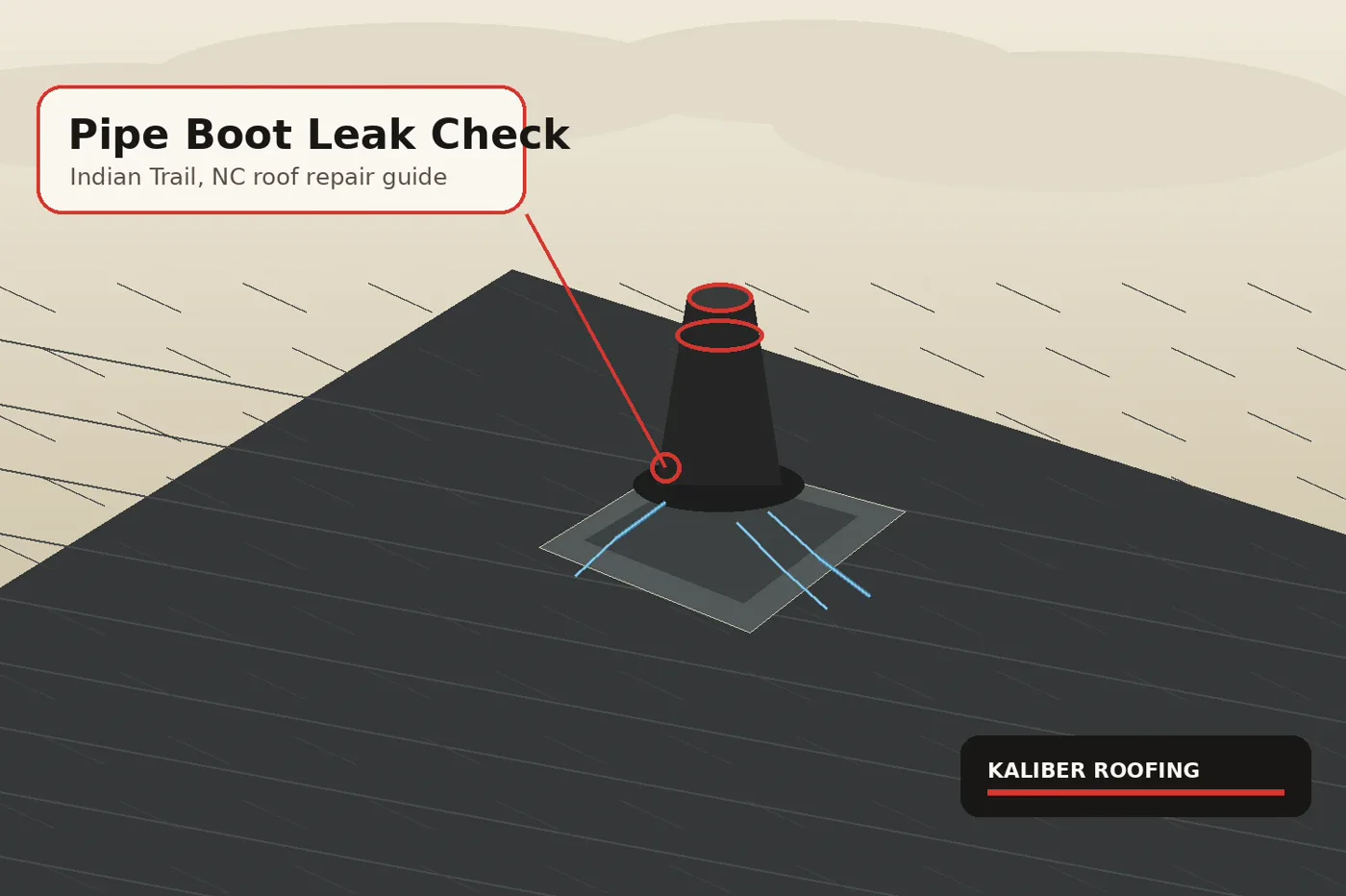
A pipe boot seals the spot where a plumbing vent passes through the roof. The lower metal or plastic flange tucks into the shingle system. The flexible rubber collar wraps around the pipe so rain cannot run down into the attic.
That seal matters because every roof penetration is a controlled weak point. Pipe boots, chimney flashing, skylights, dormers, and vents all rely on the same idea: move water around the opening, not into it.
When a boot is new and installed correctly, it can handle normal rain without much drama. As it ages, the rubber gets brittle. Small cracks become bigger splits. Then one windy storm is enough to push water under the collar.
How Long Pipe Boots Last Around Indian Trail
The realistic answer is not a perfect number. Most standard rubber boots are worth checking closely once they get near the 8 to 10 year mark. Some make it closer to 15 years. A few fail earlier, especially on sun-heavy roof slopes or roofs with poor attic ventilation.
Indian Trail homes see long stretches of heat and humidity, then quick storms that dump water hard. That combination is rough on roof accessories. The shingles may still look acceptable from the driveway while the pipe boot rubber is already cracked.
Roof age helps set expectations. If your roof is 12 years old and you have never had the pipe boots checked, they should be on the inspection list. If your roof is newer but a stain appears near a bathroom vent line after rain, do not ignore it just because the roof is not old.
Warning Signs a Pipe Boot May Be Failing
From the ground, pipe boot problems are hard to see. You may notice a plumbing vent pipe with a tilted or torn-looking collar, missing shingles nearby, or a dark line around the vent. Binoculars can help. Getting on the roof is not worth the risk.
Inside the house, watch for a ceiling stain near a bathroom, laundry room, hallway, closet, or wall chase. Water does not always fall straight down. It can run along the pipe, a rafter, insulation, or drywall seam before it finally shows up.
In the attic, if you can safely look from the access, warning signs include dark decking around a vent pipe, damp insulation, rusty nail tips, a musty smell, or daylight around the penetration. Stop there. You do not need to crawl across joists to prove the point.
After a Union County storm, new leaks matter more than old guesses. Take photos, note the date, and check whether wind came from the side that has the suspect vent. That kind of timing helps separate an aging boot from broader storm damage.
Can a Pipe Boot Be Repaired, or Does It Need Replacement?
Sometimes a limited pipe boot repair is enough. If the surrounding shingles are in good shape, the roof deck is solid, and the leak is isolated to the boot, replacing the boot or installing an appropriate repair collar may solve it.
Other times, the boot is only part of the story. Lifted shingles, cracked shingles, loose flashing, rotten decking, bad nail placement, or hail and wind damage nearby can change the recommendation. That is why the area around the penetration needs to be inspected, not just the rubber ring.
What about roof sealant? It has its place, but it is not a magic eraser. Smearing caulk over cracked rubber may buy a little time and create a bigger mess later. A real fix should explain why the boot failed and how water will be kept out through the next storm season.
Seeing a stain near a bathroom, laundry room, or vent pipe?
Schedule a Roof Leak InspectionWhat To Do Next
Start simple. Take photos of the ceiling stain, attic clue, or outside vent location if you can do it safely. Write down when you first noticed it and whether it appeared after a heavy rain, sideways rain, or hail/wind event.
Do not climb onto wet shingles or try to pull the boot apart yourself. A pipe boot leak is usually small at first, but walking around the roof can turn a repairable issue into broken shingles or a fall.
A proper inspection should check the pipe boot collar, the flange under the shingles, nail placement, surrounding shingles, decking softness, attic moisture path, and any storm damage clues nearby. If the rest of the roof is aging, the inspection should also tell you whether this is one isolated repair or a sign that several accessories are nearing the end of their life.
That is the useful answer. Not panic. Not guessing. Just follow the water and fix the weak point before it spreads.
Frequently Asked Questions
How long does a rubber roof pipe boot usually last?
Many rubber pipe boots last about 8 to 15 years, but Indian Trail heat, UV exposure, attic heat, storm wear, and roof pitch can shorten that timeline. Some fail earlier if the rubber cracks, the collar pulls away from the pipe, or the boot was installed poorly.
Can one bad pipe boot cause a ceiling stain?
Yes. A cracked pipe boot can let water follow the plumbing vent through the roof deck and into the attic. The ceiling stain may show near a bathroom, hallway, closet, or wall instead of directly under the roof penetration.
Can I seal a pipe boot with roof caulk?
Caulk may slow water for a short time, but it is usually not a real long-term fix for split rubber or a failing boot. The better repair is to inspect the boot, shingles, flashing flange, decking, and surrounding roof area, then replace or repair the boot correctly.
Should pipe boots be checked after a storm?
Yes, especially if you see shingles lifted nearby, new ceiling spots, granules in the gutter, or water marks around plumbing vent pipes in the attic. Wind-driven rain can expose weak pipe boots that looked fine during normal showers.
Does Kaliber Roofing repair pipe boot leaks near Indian Trail?
Yes. Kaliber Roofing inspects and repairs pipe boot leaks, vent pipe flashing problems, roof penetrations, storm damage, and related roof leaks in Indian Trail, Union County, Stallings, Matthews, Monroe, Waxhaw, Weddington, Mint Hill, and nearby Charlotte-metro communities.
Need someone to check a roof pipe boot leak?
Kaliber Roofing can inspect the vent boot, surrounding shingles, attic moisture path, and storm clues so you know whether it is a small repair or part of a larger roof issue.