Roof decking damage in Charlotte NC usually shows up as soft or sagging roof areas, recurring leaks, ceiling stains, moldy attic smells, dark or delaminated plywood, rusty nails in the attic, or shingles that look wavy because the wood underneath is no longer solid. If the roof feels spongy, has active water stains, or was hit by storm damage, do not walk on it. Get it inspected.
Decking is one of those roof parts homeowners rarely think about until a problem gets expensive. You do not see it from the street. You barely see it from the attic. Then a leak keeps coming back, a roofer finds soft plywood, and suddenly the question changes from “Can we patch this?” to “How much wood has to come out?”
That is why Kaliber Roofing looks past the surface shingles during a roof repair inspection. In Charlotte, Matthews, Mint Hill, Ballantyne, Indian Trail, Waxhaw, and nearby areas, decking problems are often tied to storm openings, old flashing leaks, humid attic conditions, or shingles that stayed in service too long. Sometimes it is a small repair. Sometimes the roof has reached the point where roof replacement needs to be discussed honestly.
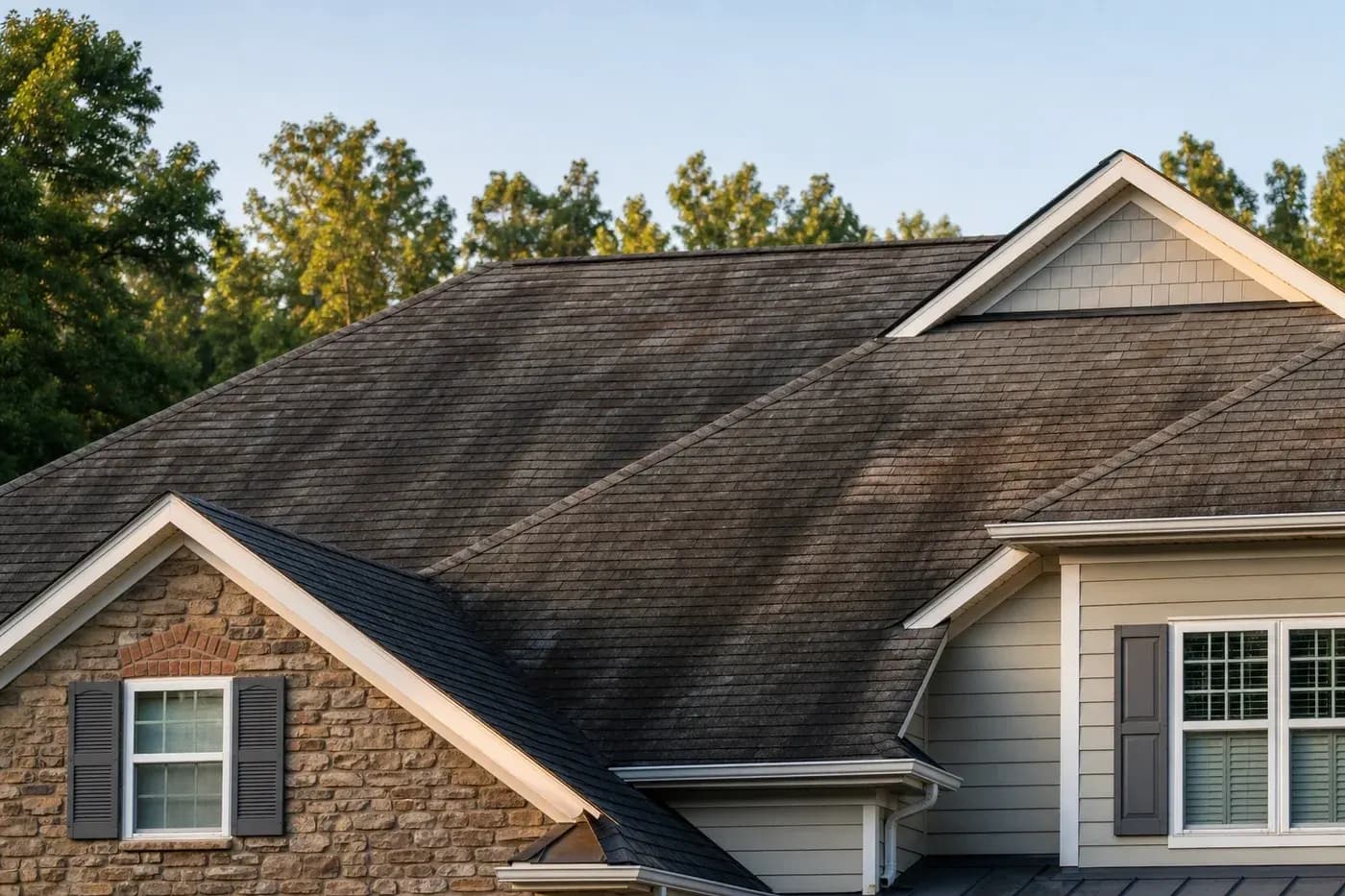
What Is Roof Decking, and Why Does It Matter?
Roof decking is the wood layer under your shingles, underlayment, and flashing. Most Charlotte homes have plywood or OSB sheathing fastened to the rafters or trusses. The shingles shed water, but the decking gives the roof system its solid surface.
When decking is dry and strong, shingles can be nailed properly, flashing can sit flat, and the roof handles normal weather the way it should. When decking gets soft, swollen, rotten, or delaminated, the roof loses that solid base. Nails may not hold. Shingles can ripple. Small leaks can become stubborn because the problem is not only on top anymore.
Here is the annoying part: damaged decking can hide for months. A roof can look decent from the yard while moisture is slowly working on the wood below. By the time you see a brown ceiling ring in the hallway, the leak may have traveled from a chimney, pipe boot, valley, or storm-damaged shingle several feet away.
What Are the Signs of Damaged Roof Decking?
Start inside. Ceiling stains, bubbling paint, damp insulation, and musty attic air are early warnings. If you can safely look from the attic, check for dark plywood patches, water trails, black spotting, rusty nail tips, daylight around penetrations, or wood that looks swollen at the seams.
Outside, watch for sagging roof lines, wavy shingles, shingles that will not lay flat, dips near valleys, and areas that seem to hold debris or moisture longer than the rest of the roof. A single dip does not prove rotten decking, but it earns attention.
Then there is the leak that keeps coming back. You patch a pipe boot, then the stain returns. You seal a flashing edge, then rain from a different direction finds the same room. That pattern often means the roof needs a deeper look, not another tube of sealant.
And if someone says the roof felt “spongy” underfoot, take that seriously. Soft decking is not a cosmetic issue. It can be a fall hazard for anyone walking the roof and a sign that water has been getting under the shingles for a while.
Why Decking Damage Happens Around Charlotte
Charlotte roofs deal with a rough mix: humid summers, hard afternoon storms, wind-driven rain, mature tree cover, and the occasional hail event. None of that automatically ruins decking. But when a small opening forms, the local weather can keep feeding it.
Common causes include missing shingles after wind, cracked pipe boots, loose chimney flashing, clogged valleys, nail pops, old skylight flashing, and gutter backups that let water sit where it should move away. Poor attic ventilation adds another problem from below. Warm moist air can collect in the attic, condense on cooler surfaces, and make roof sheathing age faster than it should.
Tree-heavy neighborhoods in south Charlotte, Matthews, Mint Hill, Weddington, and Waxhaw can see extra trouble around valleys and roof edges. Leaves pile up. Limbs scrape shingles. A small branch impact may not look dramatic, but if it bruises the roof surface or opens a seam, water gets a path.
So no, decking damage is not always “storm damage.” Sometimes it is. Sometimes it is a years-long leak that finally showed itself. The difference matters, especially if insurance might be involved.
Can Roof Decking Damage Be Repaired?
Yes, if the damage is limited. A small section of bad decking around a pipe boot, valley, or old flashing detail may be removed and replaced during a targeted repair. The surrounding shingles, underlayment, flashing, and roof age decide whether that is practical.
Replacement becomes more likely when the roof is older, brittle, leaking in several places, or showing soft decking across multiple slopes. At that point, chasing isolated patches can become a bad use of money. You fix one spot, then the next storm finds another weak area.
During a full replacement, bad decking is removed before new underlayment and shingles go on. That is not an upsell. New shingles need solid wood underneath. If the decking will not hold fasteners correctly, the new roof system starts with a weak foundation.
Kaliber’s approach is simple: repair first when a repair is honest. Replace only when the roof condition justifies it. If the evidence points both ways, we will show you the photos and talk through the tradeoff before you spend money.
Seeing stains, soft spots, or a leak that keeps returning?
Request a Free Roof Decking InspectionWhat Kaliber Looks for During a Decking Inspection
We start with the story of the problem. When did the leak appear? Was there wind, hail, or a fallen limb? Has the stain been painted over before? Does the leak only happen with wind-driven rain? Those details narrow the search.
Then we inspect visible roof surfaces, flashing, valleys, roof penetrations, ridge areas, gutters, and the attic when access is safe. Photos matter here. Homeowners should be able to see what we are talking about, whether it is dark sheathing, failed flashing, lifted shingles, missing granules, or moisture clues around nails.
If insurance may be involved, documentation gets even more important. Kaliber can document roof conditions and visible damage, but the carrier decides coverage. Long-term rot and sudden storm damage are usually treated differently, so guessing helps nobody.
One thing we will not do is tell you the whole roof is ruined based on one stain. Decking problems need context: roof age, shingle condition, ventilation, leak path, storm history, and how much wood is actually compromised.
When Should You Call a Roofer?
Call if you see an active leak, a new ceiling stain after a storm, sagging roof areas, shingles in the yard, a branch impact, attic mold smells, or dark wet-looking plywood. Also call before buying or selling a home if the inspection report mentions soft decking, moisture staining, or prior roof leaks.
Do not climb up to test the roof yourself. Seriously. If the decking is weak, your body weight is the worst inspection tool you can use.
For Charlotte-area homeowners, the safest next step is a documented inspection. You get photos, a plain-English explanation, and a repair-vs-replacement recommendation that fits the roof you actually have — not a canned answer.
If you are unsure, call Kaliber Roofing. We will inspect the roof, explain what is urgent, and help you decide whether a small repair, storm documentation, or a larger replacement conversation makes sense.
Frequently Asked Questions
How do I know if my roof decking is damaged in Charlotte NC?
Watch for soft or bouncy roof areas, sagging roof lines, recurring leaks, ceiling stains, moldy attic smells, dark or delaminated plywood, rusty nails, and shingles that will not lay flat. Some decking damage is only visible during a roof inspection or after shingles are removed.
Can damaged roof decking be repaired without replacing the whole roof?
Sometimes. If the damaged area is small, accessible, and the surrounding roof is still in good shape, a targeted repair may work. Widespread soft decking, multiple leak areas, old shingles, or storm damage across several slopes may make roof replacement the cleaner answer.
What causes roof decking to rot?
The usual causes are long-term leaks, failed flashing, clogged valleys, missing shingles, poor attic ventilation, trapped humidity, and storm damage that lets water reach the wood sheathing. Charlotte humidity can make a small moisture problem worse if it goes unnoticed.
Does insurance cover damaged roof decking?
Insurance may cover decking damaged by a sudden covered event such as wind, hail, or a fallen tree, but it usually does not cover long-term wear, old leaks, or maintenance problems. Coverage depends on the policy and adjuster findings.
Is it safe to walk on a roof with damaged decking?
No. Soft or rotten decking can give way under weight, especially after rain. Check from the ground or attic where safe, then have a roofing professional inspect the roof surface.
Does Kaliber inspect roof decking outside Charlotte?
Yes. Kaliber Roofing checks roof decking concerns in Charlotte, Indian Trail, Matthews, Mint Hill, Ballantyne, Pineville, Weddington, Stallings, Monroe, Waxhaw, Concord, Huntersville, Cornelius, Midland, and nearby communities.
Need a straight answer about soft decking or recurring leaks?
Kaliber Roofing will inspect the roof, document what we find, and explain whether repair, replacement, or storm documentation makes sense.