Hail damage usually shows up as random impact marks tied to a specific storm, often with bruised shingles, fresh granule loss, and dents on gutters, vents, or other soft metal. Roof blistering is more often an age, heat, ventilation, or manufacturing-related shingle problem that creates popped spots over time. From the ground, they can look similar, so Indian Trail homeowners should document the storm timing and have the roof inspected before assuming it is an insurance claim.
After a loud hailstorm in Union County, it is easy to look at dark shingle spots and think the roof is ruined. Sometimes that concern is valid. Hail can bruise asphalt shingles and loosen granules that protect the mat from sun and rain. But not every dark spot is hail. Older shingles can blister, scuff, or shed granules in ways that mimic impact marks.
Kaliber Roofing is based in Indian Trail and handles storm damage roof inspections, roof repairs, and insurance-restoration conversations across Indian Trail, Stallings, Matthews, Monroe, Waxhaw, Weddington, Mint Hill, and nearby Charlotte-metro neighborhoods. The goal is not to scare you into a claim. The goal is to separate fresh storm damage from normal roof aging with photos and a clear explanation.
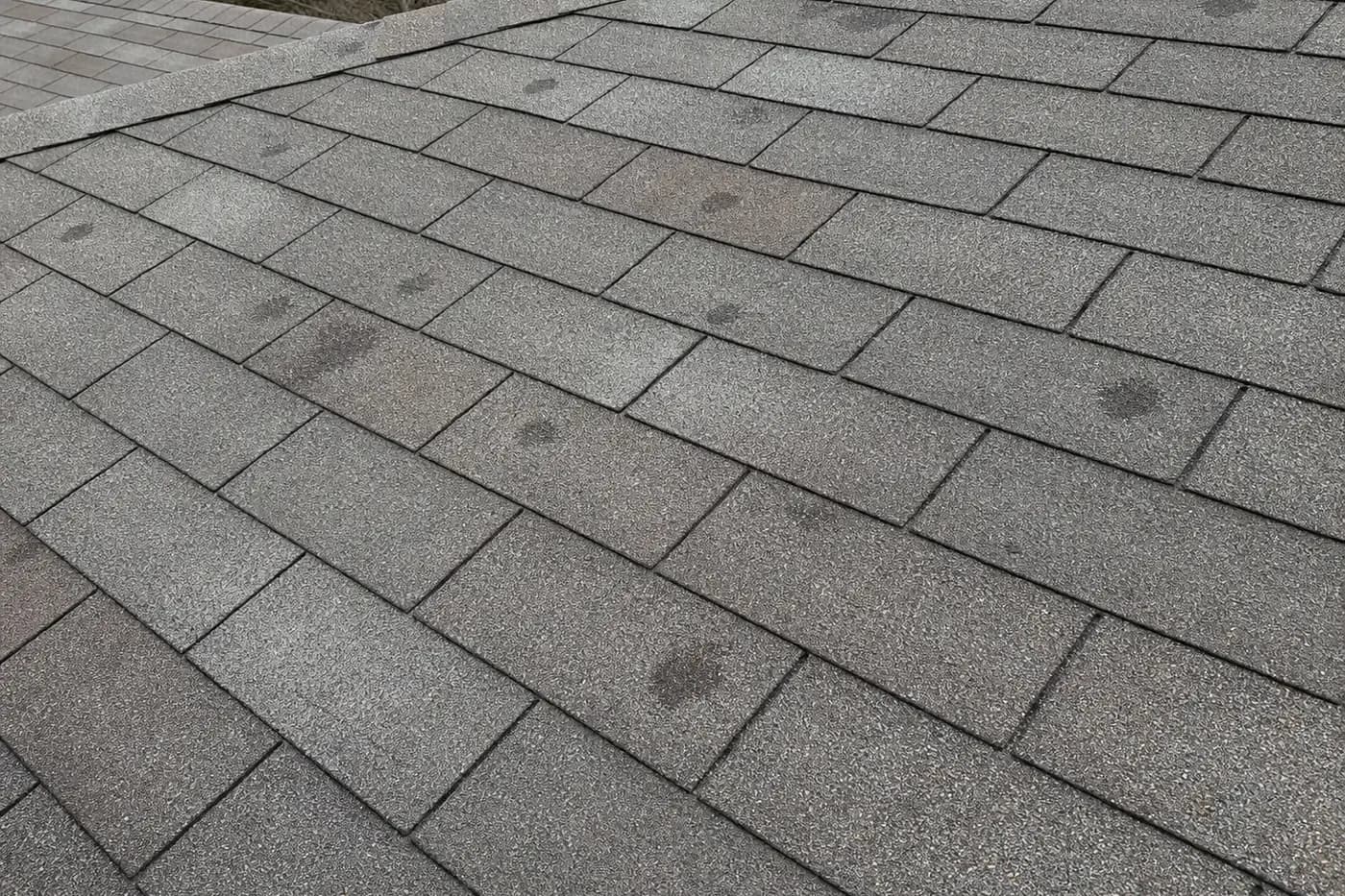
Why the Difference Matters
The difference matters because the next step changes. Confirmed hail damage may involve storm documentation, an adjuster inspection, and an insurance-restoration process. Blistering usually points to roof age, shingle condition, ventilation, heat exposure, or product wear, which may be handled through maintenance planning, repair, or eventual replacement instead of a storm claim.
It also matters because a wrong assumption can waste time. Filing a claim for normal wear can create frustration. Ignoring real hail damage can let bruised shingles keep losing granules until leaks or premature aging show up later. The honest path is a documented inspection that explains what is visible, what is not visible, and what still needs monitoring.
Indian Trail weather adds another wrinkle. Fast-moving storms can hit one side of a neighborhood harder than another. A roof in Stallings or Matthews may show different evidence than a home a few miles away in Monroe or Waxhaw. That is why storm date, hail size reports, wind direction, and roof slope exposure all matter.
Signs That Point More Toward Hail Damage
Hail damage tends to be irregular. Impacts do not usually line up neatly. They can show as dark bruises, crushed granules, shiny asphalt spots, or small areas where the shingle mat feels softer than the surrounding surface. On severe hits, the mark may be obvious. On borderline storms, the evidence can be subtle.
A roofer will look beyond the shingles. Dents in gutters, downspouts, ridge vents, metal flashing, roof vents, AC fins, mailbox tops, or soft aluminum trim can support the story that hail hit the property. Those dents do not automatically prove shingle damage, but they help confirm that the roof was exposed to impact.
Fresh granule loss is another clue. After hail, you may see granules near downspout exits or in gutters. Some granule shedding is normal on asphalt shingles, especially new roofs or older roofs, so the pattern and timing matter. If the granules showed up right after a storm and match new impact marks, that deserves a closer look.
Signs That Point More Toward Roof Blistering
Blistering often looks like small popped or pitted spots in the shingle surface. Instead of a clean impact pattern, you may see many little dark areas spread across sun-baked slopes. The edges can look weathered instead of freshly crushed. Some blisters stay raised for a while before they pop and expose darker asphalt below.
Blistering is often tied to roof age, attic heat, ventilation issues, shingle manufacturing characteristics, or long-term UV exposure. That does not make it harmless. Once granules are gone, the shingle loses protection. But it is a different conversation than a sudden hail event.
One practical clue is history. If similar spots were visible before the latest storm, blistering or aging may be more likely. If the marks appeared suddenly after a known hail event and other metal surfaces are dented, hail moves higher on the suspect list.
What You Can Check Safely From the Ground
Stay off the roof. Hail-damaged shingles, wet roofs, and older blistered shingles can be slippery and fragile. From the ground, take photos of each side of the house, any visible dark roof spots, gutter dents, downspout dents, and granules washed out near splash blocks. If you can safely photograph a low-slope area from a window, do that instead of climbing.
Write down the date and approximate time of the storm. Note whether hail actually fell at your property, how long it lasted, and whether neighbors had similar damage. Save any weather alerts, photos, or videos you already took during the storm.
Inside the home, look for new ceiling stains, attic dampness, or daylight around roof penetrations only if you can access those areas safely. A leak does not have to appear immediately after hail, but new interior symptoms after a storm should move inspection higher on the priority list.
Not sure if those shingle marks are hail damage or blistering?
Request a Free InspectionHow Kaliber Inspects Hail vs Blistering
Kaliber checks the roof as a full system, not just one dark spot. We look at the mark pattern, shingle mat condition, granule displacement, roof slope orientation, ridge and vent metals, gutters, flashing, age indicators, and any leak evidence. Photos are part of the process because homeowners should see what we are seeing.
If the evidence points toward storm damage, we can explain the visible findings and help you understand the insurance restoration documentation conversation without promising coverage. If the evidence points toward blistering or age, we will say that too and talk through whether repair, monitoring, or roof replacement planning makes more sense.
The main thing is not to let uncertainty sit through another storm season. If your Indian Trail roof has fresh-looking impact marks, sudden granule loss, metal dents, or new leaks after hail, get a professional eye on it while the timeline is still clear.
Frequently Asked Questions
What is the easiest way to tell hail damage from roof blistering?
Hail damage is more likely when marks appeared after a specific storm, show as random impact bruises, or line up with dents on soft metal. Blistering is more often age and heat related, with small popped spots that may appear across sun-exposed areas over time.
Can blistering look like hail damage on asphalt shingles?
Yes. Both can leave dark spots or missing granules. That is why a close inspection matters. A roofer looks at the mark pattern, shingle mat condition, storm timing, nearby metal dents, roof age, and whether the damage is fresh or weathered.
Should I file an insurance claim if I see dark spots after hail?
Do not rush into a claim based on dark spots alone. Document the storm date, take safe ground-level photos, check gutters and downspouts for granules, then have the roof inspected. Coverage depends on the policy, the adjuster, and whether covered storm damage is confirmed.
Is roof blistering an emergency?
Usually not by itself, but widespread blistering can mean the shingles are aging or losing protective granules. If blistering is paired with leaks, missing shingles, soft decking, or recent storm damage, schedule an inspection sooner.
Does Kaliber Roofing inspect hail damage and blistering in Indian Trail NC?
Yes. Kaliber Roofing inspects hail concerns, shingle blistering, granule loss, storm damage, and roof aging across Indian Trail, Union County, and nearby Charlotte-metro communities.
Need a clear hail-vs-blistering inspection in Indian Trail?
Kaliber Roofing will document the roof, explain the visible evidence, and help you decide whether this is a repair, storm-damage, or roof-aging conversation.