Chimney flashing is probably leaking if you see a ceiling stain near the chimney, damp drywall around the fireplace, wet attic decking beside the chimney, rusted or lifted flashing, cracked sealant, or a leak that only appears during wind-driven rain. In Charlotte NC, the fix might be a targeted flashing repair, but the roof and chimney both need to be checked before anyone guesses from the driveway.
Chimney leaks are annoying because they like to hide. One storm rolls through, everything looks fine outside, and then a brown stain blooms on the ceiling two feet away from the fireplace. Or you smell that damp attic smell after a humid week and cannot tell whether the water is coming from shingles, masonry, a cap, or the flashing.
That is why a good roof repair inspection does not stop at “add more caulk.” Chimney flashing is a water-shedding system. If one part is loose, reused, rusted, cut short, or buried under old sealant, Charlotte rain will eventually find it.
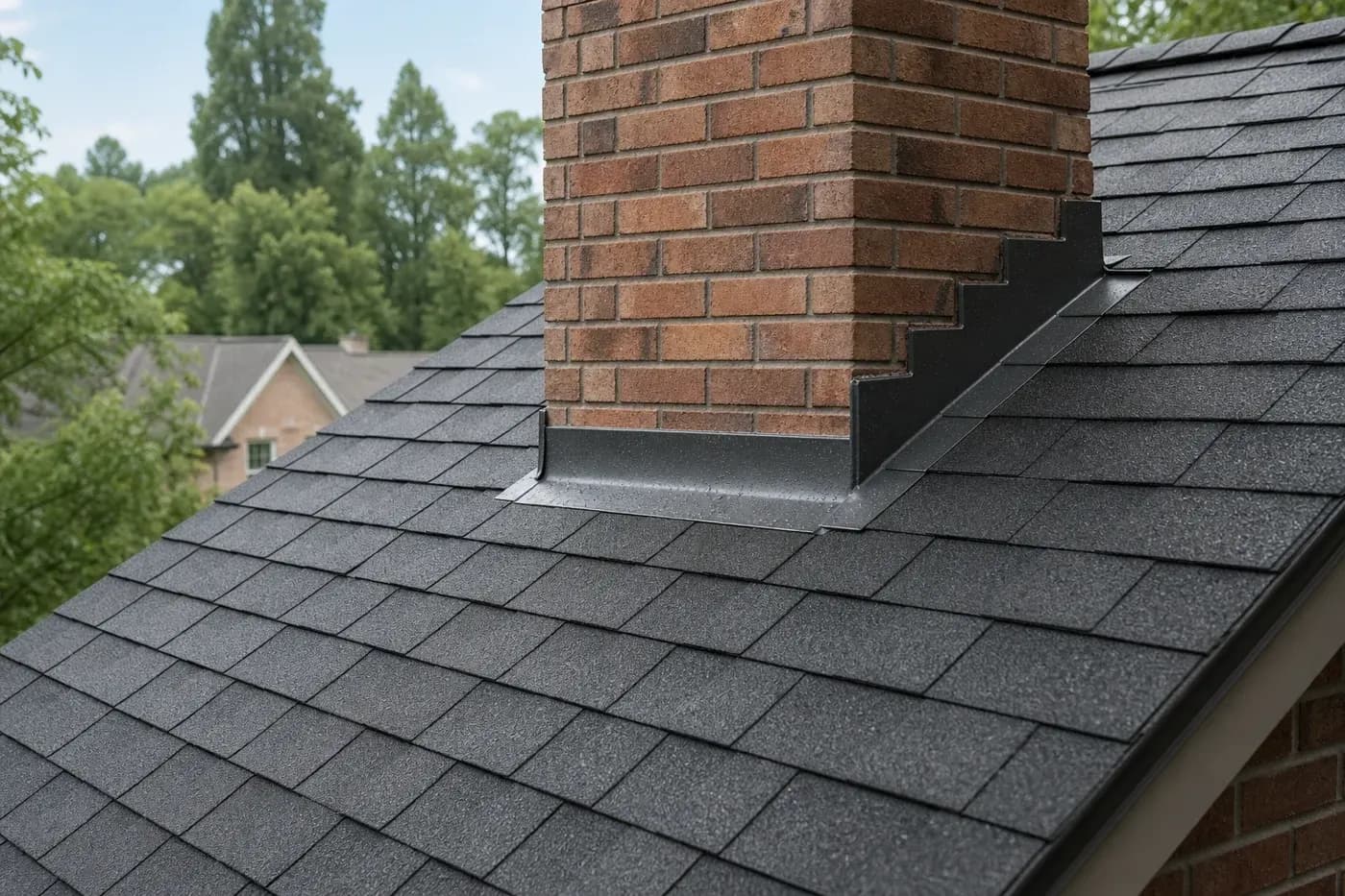
Why Does Chimney Flashing Leak?
Flashing is the metal detail that bridges the gap between the roof and chimney. Step flashing tucks into the shingle courses. Counter flashing covers the top edge and helps keep water from getting behind the metal. When it is installed correctly, water runs down the roof, hits the chimney area, and gets directed back onto the shingles instead of into the house.
Leaks happen when that path breaks. Sometimes the flashing was reused during an old roof replacement. Sometimes the counter flashing pulls loose from the brick. Sometimes sealant dries out and cracks. Sometimes the shingles around the chimney are aging faster because leaves and pine needles stay packed in the corners.
And sometimes the chimney is the problem, not the roof. Cracked mortar, a damaged chimney crown, missing chimney cap, or porous masonry can send water down behind flashing that is otherwise doing its job. That is why the inspection needs to separate roof failure from chimney failure before the repair gets priced.
Warning Signs Inside the House
The classic sign is a ceiling stain near the chimney chase or fireplace wall. It might be tan, brown, yellow, or slightly gray at first. If the leak is active, paint may bubble or drywall tape may loosen. In an attic, you might see dark roof decking, wet insulation, rusted nails, or water trails on framing around the chimney opening.
Here is the tricky part: the stain does not have to be directly under the bad flashing. Water can run along rafters, sheathing, insulation, or drywall seams before it drops. So a stain that looks like a “ceiling problem” may still start at the chimney several feet away.
Musty smell counts too. In Charlotte summers, trapped moisture around a chimney can turn stale fast. If a room near the fireplace smells damp after rain, do not ignore it just because there is no active drip.
Why Charlotte Weather Makes Flashing Leaks Show Up
Charlotte roofs deal with a little bit of everything: hot UV-heavy summers, sudden thunderstorms, wind gusts, hail in some neighborhoods, leaf debris, pine needles, and long humid stretches where materials do not dry as quickly as you want. Chimneys sit right in the middle of that mess.
Wind-driven rain is the big one. Water does not always fall straight down. It can push sideways under a loose counter-flashing edge, around a corner, or into a tiny gap that stays dry during a gentle rain. That is why some chimney leaks only appear during the “sideways rain” storms homeowners remember.
Tree cover changes the picture too. In Matthews, Mint Hill, Weddington, Waxhaw, Indian Trail, and older Charlotte neighborhoods, shaded roofs can hold leaves and moisture around chimney crickets and back pans. Debris traps water. Trapped water tests every flashing seam.
What Can You Check Safely?
Start inside. Take photos of the stain, the fireplace wall, the attic decking if you can access it safely, and any wet insulation. Use a flashlight. Do not step on ceiling drywall or wet insulation. If the attic is cramped, stop there.
From the ground, use phone zoom or binoculars. Look for metal flashing that is sticking up, missing, bent, rusted, or covered in thick old caulk. Check whether shingles around the chimney look cracked, curled, or unusually worn. Look for piles of leaves on the uphill side of the chimney.
Do not climb onto a wet roof to “just check one thing.” Seriously. Chimneys are often on steeper, higher, or more complex roof sections. A leak inspection is cheaper than a fall.
Can Chimney Flashing Be Repaired, or Does the Roof Need Replacement?
If the roof is otherwise healthy, chimney flashing can often be repaired without replacing the whole roof. The repair may include removing shingles around the chimney, replacing step flashing, correcting counter flashing, adding underlayment, rebuilding a back pan or cricket detail, and tying the shingles back in cleanly.
Replacement enters the conversation when the flashing leak is only one symptom. If the roof is old, shingles are brittle, granules are gone, decking is soft, multiple areas are leaking, or the old flashing was patched over again and again, a bigger roof replacement discussion may be more honest than chasing one corner.
Insurance depends on cause. Sudden storm damage, falling limbs, or wind-related damage is different from age, old sealant, poor installation, or long-term maintenance. Kaliber can document roof conditions and storm clues, but your insurance carrier decides coverage. If the leak started after a storm, photograph the timeline before cleanup and ask for a documented storm damage inspection.
Seeing stains near a chimney, fireplace wall, or attic decking?
Request a Free Roof InspectionWhen Should You Call Kaliber?
Call when a stain appears after rain, the same area gets damp more than once, you can smell moisture near the fireplace, or you see loose flashing from the ground. Also call if a strong storm just moved through and the leak is new. Waiting usually makes the repair less predictable, not cheaper.
Kaliber Roofing will inspect the roof around the chimney, flashing, shingles, nearby valleys, attic clues where accessible, and related storm damage signs. Then we will explain whether the fix looks isolated, whether chimney masonry needs a specialist, or whether the roof condition changes the recommendation.
The goal is simple: find the real entry point before water turns one ceiling stain into drywall repair, insulation replacement, and a bigger roofing bill.
Frequently Asked Questions
How do I know if my chimney flashing is leaking?
Common signs include ceiling stains near the chimney, damp drywall around a fireplace, musty attic smells, wet roof decking near the chimney, rusted or loose flashing, cracked sealant, and leaks that show up after wind-driven rain. The stain may not sit directly under the outside failure point because water can travel along framing.
Can chimney flashing be repaired without replacing the whole roof?
Yes, if the leak is isolated and the surrounding shingles, decking, and chimney masonry are still in good condition. A proper repair may involve step flashing, counter flashing, underlayment, shingles around the chimney, and sometimes masonry or chimney cap work.
Is caulk enough to fix a chimney flashing leak?
Caulk can temporarily slow a tiny gap, but it is usually not a real fix for failed chimney flashing. If the metal flashing is loose, missing, rusted, cut wrong, or buried under old sealant, the detail needs to be rebuilt so water sheds correctly.
Why do chimney leaks get worse during Charlotte storms?
Charlotte storms can bring heavy rain, sudden gusts, and wind-driven water. That water can push sideways around a chimney, especially when flashing is old, sealant is cracked, gutters overflow nearby, or tree debris traps moisture against the roof.
Should I call a roofer or chimney company first?
If the water appears at the roofline, attic decking, ceiling, or shingles around the chimney, start with a roofer. If the inspection points to cracked masonry, a failing chimney cap, or mortar problems above the flashing, a chimney specialist may also be needed.
Does Kaliber inspect chimney flashing leaks around Charlotte?
Yes. Kaliber Roofing inspects chimney flashing leaks, roof-to-wall transitions, pipe boots, valleys, shingles, attic moisture, storm damage, and related roof repair issues around Charlotte, Indian Trail, Matthews, Mint Hill, Ballantyne, Pineville, Weddington, Stallings, Monroe, Waxhaw, Concord, Huntersville, Cornelius, Midland, and nearby communities.
Need a straight answer about a chimney flashing leak?
Kaliber Roofing will inspect the roof, document the leak clues, and tell you whether a targeted repair, storm documentation, chimney specialist, or replacement planning makes sense.