Most permanent asphalt-shingle repairs should not be installed while the roof surface, exposed deck, or repair materials are still wet. A wet roof increases fall risk, can keep membranes and sealants from bonding as designed, and can hide moisture that should not be trapped beneath new layers. That does not mean an active leak must be ignored. A roofer may be able to assess the interior, protect the occupied space, document the water path, or install limited temporary protection once conditions allow. The permanent repair should begin only when the work area is safe and the specific shingles, underlayment, flashing, decking, and sealants can be installed on a suitable substrate under their product instructions.
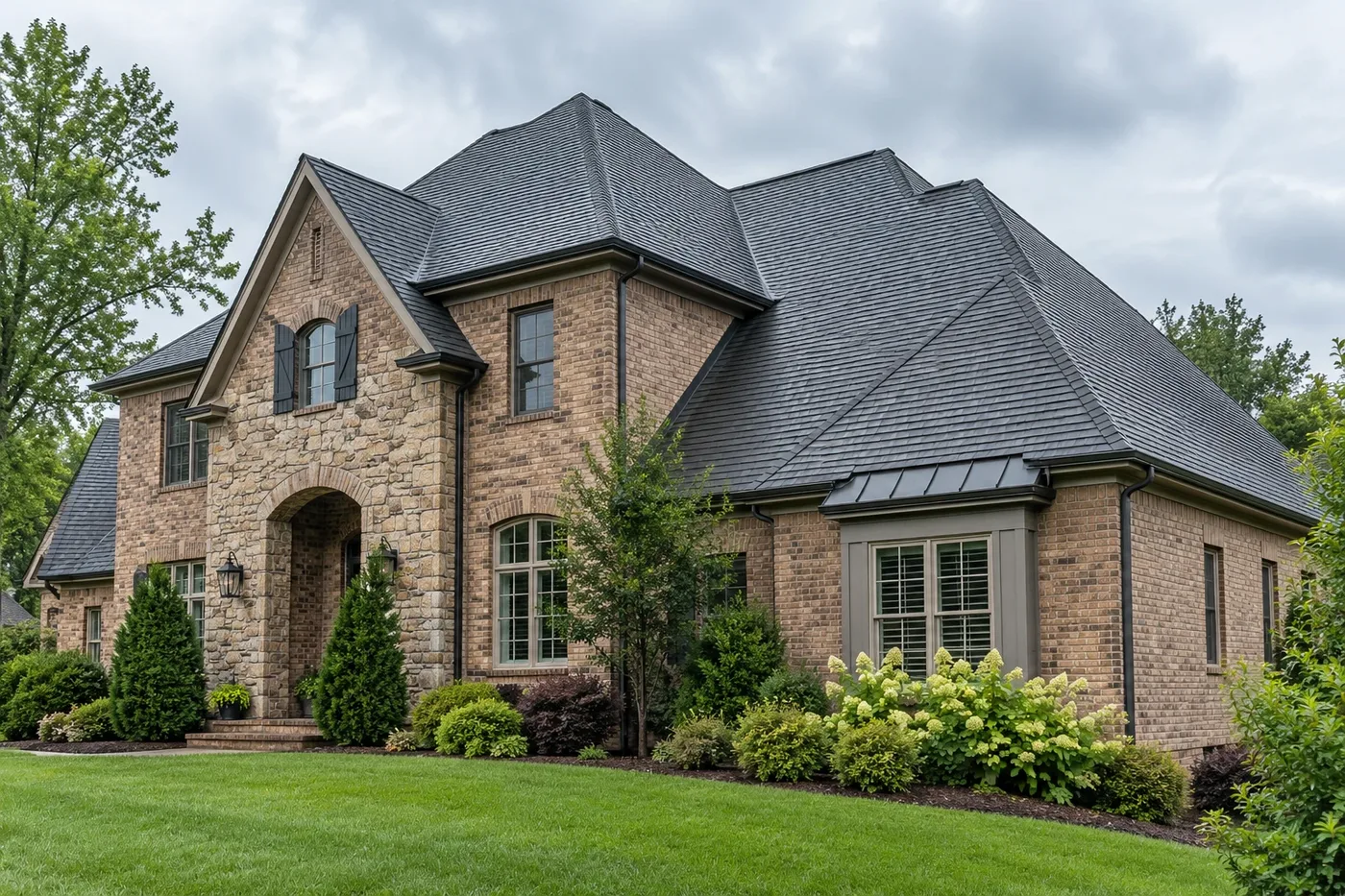
A wet roof creates both a safety problem and an installation problem
Rain changes the work surface before it changes the repair plan. Asphalt shingles, metal flashing, ladders, underlayment, and roof edges can become slippery. OSHA identifies wet roof surfaces as a fall hazard and requires roofing employers to plan appropriate fall protection. Homeowners should stay off the roof during rain and while the surface remains wet.
Moisture also affects the materials being installed. Owens Corning shingle instructions call for protecting wood decking from getting wet before, during, and after installation. Its self-adhered underlayment instructions require a clean, dry deck. GAF likewise says the substrate must be clean and dry for its self-adhered leak barriers and directs installers to stop when the membrane or overlaps are not adhering.
Those requirements matter in a focused repair because opening a few shingles can expose underlayment and decking just as a full tear-off does. A repair is not complete merely because the visible opening is covered. Every disturbed layer needs to be restored under conditions that allow it to drain, fasten, and bond as intended.
Emergency protection and permanent repair are different jobs
An active interior leak may need immediate loss-control steps even when exterior repair work must wait. Move belongings away from the drip, use a container only where it is safe, and keep clear of wet lights, outlets, ceiling fans, wiring, and sagging drywall. Use emergency services for smoke, sparking, fire, or an immediate shock or collapse hazard.
A roofing contractor may be able to document the leak from inside, inspect a safely accessible attic, or plan temporary protection after the storm passes. Temporary dry-in is meant to limit additional water entry until a permanent repair can be completed. It should not be represented as a finished repair, and nobody should install a tarp while rain or wind makes roof access unsafe.
Do not climb up with roofing cement and assume a product labeled for wet surfaces makes the entire roof safe or the repair durable. One sealant may tolerate damp application while the surrounding shingles, deck, underlayment, fasteners, or flashing still require different conditions. The complete repair must satisfy every material and safety constraint, not just one tube label.
There is no universal number of hours a roof must dry
A roof can look dry from the lawn while shaded valleys, laps, shingle undersides, or exposed wood remain damp. Drying time changes with rain amount, temperature, humidity, sun, shade, roof pitch, wind, material type, and whether water entered beneath the roof covering. An arbitrary wait such as two hours or one day cannot confirm the condition of a specific repair area.
The roofer should check the actual work surface and the materials that will be opened. If decking is exposed, its condition and moisture need to be evaluated before it is covered. If self-adhered membrane is part of the repair, the substrate must meet that product’s preparation and temperature requirements. If existing shingles must be lifted, they also need to remain flexible enough to separate without creating new cracks or creases.
Around Indian Trail and Union County, a brief shower may be followed by sun while another band of rain remains nearby. A responsible repair window accounts for both current dryness and the forecast long enough to open, rebuild, and weatherproof the repair boundary without rushing wet materials back together.
A dry surface does not prove the hidden roof layers are sound
If rain entered beneath shingles, the visible surface may dry before the underlayment, decking, insulation, or framing. The repair should trace the highest reliable moisture evidence and open enough of the failed area to inspect the layers crossed by water. Soft, swollen, delaminated, or decayed decking cannot be made serviceable by waiting for its face to look dry.
The leak source may also sit away from the wet ceiling mark. Water can travel along decking, underlayment, rafters, pipes, wiring, or insulation. A dry-day inspection can still find useful evidence by combining the homeowner’s rain timeline, interior and attic clues, roof geometry, flashing, penetrations, valleys, and roof edges.
This distinction keeps a repair-first recommendation honest. If one isolated defect can be tied into sound surrounding roofing, a focused repair may be appropriate. If opening the area reveals widespread weak decking, brittle shingles that cannot be integrated reliably, or several unrelated failures, the scope may need to expand. The decision should follow the documented condition rather than the weather alone.
Ask what must be dry before authorizing the repair
A useful repair scope should identify the suspected failure, the layers likely to be opened, the planned materials, the repair boundary, and what happens if concealed wet or damaged decking appears. Ask which manufacturer instructions govern the shingles, membrane, flashing, and sealants, and how the crew will confirm the surface is ready.
Before work begins, photograph the interior symptom and note when the rain started, when the drip appeared, whether wind direction mattered, and whether moisture continued after rain stopped. After the repair, keep before-during-after photos, the final invoice, material information, and Kaliber’s written one-year warranty for the repair work it performs. That workmanship coverage is separate from any manufacturer material warranty.
Kaliber Roofing serves Indian Trail first with photo-documented, repair-first inspections available the same or next day subject to scheduling. The practical goal is to protect the home promptly, wait out unsafe or unsuitable conditions when necessary, and complete the smallest dependable permanent repair once the actual work area is ready.
Related guidance
Common questions
Can a roofer inspect my leak while the roof is wet?
Interior, attic, and ground-level documentation may be possible while the symptom is active, but roof access depends on weather, slope, surface condition, structural condition, and the contractor’s safety plan. Wet exterior work should be postponed when conditions create an unsafe fall risk.
Can roofing cement be applied to a wet roof?
Some products are labeled for damp or wet application, but that does not make every wet-roof repair safe or permanent. The contractor must identify the failed assembly and follow the instructions for every shingle, membrane, flashing, fastener, and sealant in the repair—not rely on one surface coating.
How long after rain should roof repair begin?
There is no universal waiting period. The repair can begin when access is safe, the actual work area and any exposed substrate meet the selected products’ requirements, hidden moisture has been evaluated, and the forecast provides enough time to complete and weatherproof the opened section.
Will waiting for the roof to dry make the leak worse?
The opening should not be ignored, but unsafe exterior work is not the answer. Protect the interior, document the leak, and have a roofer determine whether temporary protection can be installed safely. Complete the permanent repair as soon as suitable conditions and the actual roof assembly allow.
Does a wet roof automatically need replacement?
No. Rain on the roof surface does not justify replacement. The decision depends on where water entered, whether the surrounding shingles and flashing remain serviceable, whether decking or other hidden layers are damaged, and whether a durable repair can be tied into sound roofing.
Sources and editorial notes
- OSHA guidance on fall hazards, wet roof surfaces, and fall protection during reroofing
- Owens Corning asphalt-shingle instructions on protecting wood roof decking from moisture
- Owens Corning underlayment instructions requiring a clean, smooth, dry roof deck
- GAF guidance on dry substrates, adhesion checks, weather conditions, and hand-sealing during repairs
Prepared with AI assistance and editorially reviewed by Sage. General homeowner guidance; not an on-site diagnosis, site-specific safety plan, product-specific installation approval, moisture determination, structural conclusion, or substitute for evaluation by the appropriate qualified professional.