Yes, a satellite dish mount can cause a roof leak in Indian Trail when mounting screws, old sealant, lifted shingles, or abandoned bracket holes let rain reach the roof deck. The leak may not show up directly below the dish, either. Water can follow a rafter, underlayment seam, or ceiling cavity before it stains drywall. If you see an old dish mount, patched screw heads, or a leak after wind-driven rain, have that roof area checked before the next Union County storm.
Satellite dishes are common on older homes around Indian Trail, Stallings, Matthews, Monroe, Waxhaw, and Weddington. Some are still active. Plenty are abandoned. Either way, the roof does not care whether the dish is being used. It cares about the holes.
A dish mount usually needs fasteners to hold against wind. Those fasteners often go through shingles and into decking. If the installer used the wrong sealant, missed the framing, over-tightened the screws, or left old holes behind when the dish was removed, the roof can become vulnerable. Quietly at first.
Kaliber Roofing checks old mounts and roof penetrations during roof repair inspections, storm damage roof evaluations, and free roof inspection appointments across Indian Trail and the surrounding Charlotte-metro service area.
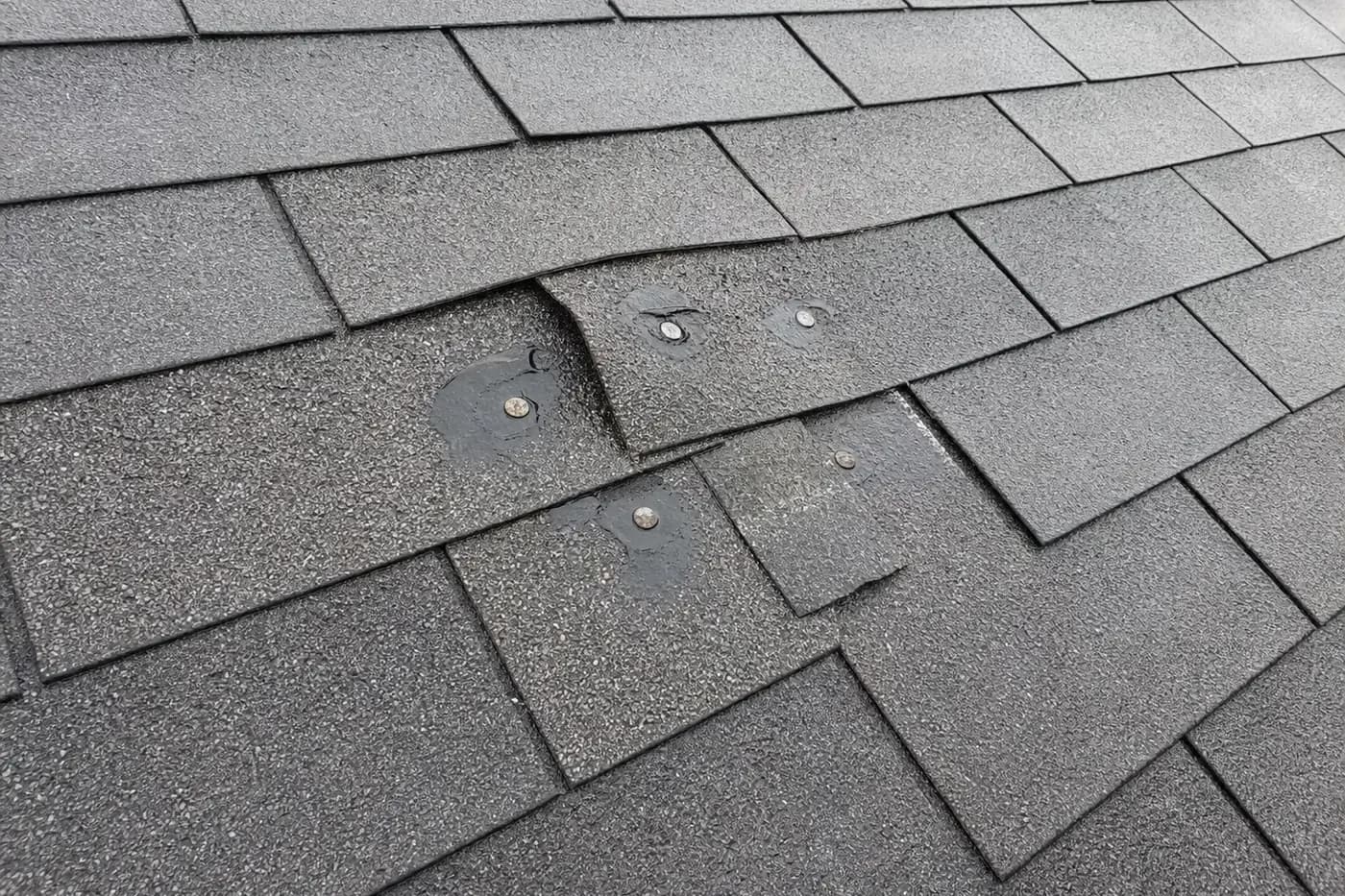
Why Satellite Dish Mounts Leak
A roof is designed to shed water in layers. Shingles overlap. Flashing redirects water. Underlayment adds a backup layer. A satellite dish mount interrupts that system because it usually puts fasteners through the roof surface.
That does not mean every dish mount leaks. A properly installed and maintained detail can stay dry for years. The problem is that sealant ages. Fasteners move. Shingles shrink and curl. Wind tugs on the dish. Then a tiny opening that used to stay quiet becomes a leak path.
Removed dishes are just as risky. Sometimes the dish is taken off, but the foot plate, screws, or old patched holes remain. Sometimes the bracket is removed and the holes are dabbed with roof cement. That may get through a few rains. It is not the same as restoring the shingle system.
Indian Trail weather makes weak details show up fast. Summer heat dries sealants. Humidity keeps decking damp longer once water gets in. Pop-up storms push rain sideways. A mount that looked harmless in spring can become a ceiling stain by the end of storm season.
Warning Signs Around an Old Dish Mount
From the ground, you may see a dish leaning, a mount base sitting crooked, dark patches of sealant, lifted shingles around the bracket, missing granules, exposed screw heads, or abandoned hardware on one roof slope. Binoculars help. Climbing up there after rain does not.
Inside the home, watch for a ceiling stain, bubbling paint, damp insulation, a musty smell, or a leak that only appears during windy rain. The stain may show up in a bedroom, hallway, closet, or attic area that does not line up perfectly with the dish. Water is annoying like that.
If the dish is on the same slope above the stain, it belongs on the suspect list. If there are nearby vents, pipe boots, wall flashing, or a valley, those should be checked too. A good inspection proves the source instead of blaming the most obvious old hardware.
Is It an Old Leak or a New Storm Problem?
Timing helps. If the stain appeared right after a strong storm in Indian Trail, Hemby Bridge, Stallings, or Monroe, write down the date and take photos. Wind can move a dish mount, lift shingles, and expose fastener holes that had been barely sealed.
If the stain has been slowly getting darker for months, the mount may have been leaking in small amounts for a while. That can wet decking and insulation long before water drips into the room. Small leak, bigger mess.
Storm damage and old installation problems can overlap. For example, old sealant may be cracked already, then wind-driven rain exposes it. Or hail may mark surrounding shingles while the dish fasteners are still the actual leak path. Documentation matters, especially if insurance questions come up. No roofer should promise coverage from the driveway.
What a Roofer Should Check
The inspection should start with the roof slope, the mount, and the water path. The roofer should look at every fastener, the mount base, surrounding shingle laps, cracked sealant, lifted tabs, exposed nail heads, and whether water can run under the bracket during hard rain.
The attic matters too. Damp decking, rusty nails, wet insulation, dark staining, and water tracks can show where the leak enters. If the attic is accessible, those clues often save time and prevent guesswork.
Nearby details should not be ignored. Pipe boots, roof vents, ridge vents, wall flashing, chimneys, valleys, and old nail holes can send water to the same ceiling area. The goal is not to sell the biggest repair. The goal is to find the actual failure point.
Can It Be Repaired, or Does the Roof Need Replacement?
Many satellite dish leaks can be repaired if the damage is localized. That may mean removing abandoned hardware, replacing affected shingles, correcting fastener holes, checking decking, and rebuilding the detail so water sheds correctly again. A neat repair should blend into the roof and stop depending on exposed surface caulk.
If the surrounding shingles are brittle, curled, storm-damaged, or losing granules across the whole slope, a small repair may not hold well. In that case, Kaliber may recommend discussing roof replacement timing instead of patching one weak area after another.
There is a practical middle ground. If the roof is mostly healthy, fix the mount area and monitor it. If the mount is one symptom on an aging roof with repeated leaks, price the bigger plan. Either way, the decision should come from photos and roof condition, not scare tactics.
Have an old satellite dish mount or ceiling stain in Indian Trail?
Schedule a Roof Leak InspectionWhat To Do Next
Take photos of the ceiling stain, attic area if safely visible, and the roof slope from the ground. Note whether the leak followed heavy rain, wind-driven rain, or a recent storm. If the dish was recently removed by a cable or satellite provider, write that down too.
Do not climb onto the roof to pull off hardware or smear sealant over the mount. That can make the leak harder to trace and can damage shingles that were still serviceable. It can also be dangerous, especially on a wet roof.
Then get the dish area checked before the next storm. A small fastener leak can soak decking quietly. Fixing it early is usually simpler than waiting until drywall, insulation, and sheathing are all involved.
Frequently Asked Questions
Can an old satellite dish mount leak through the roof?
Yes. Dish mounts can leak when fasteners penetrate shingles and decking, sealant dries out, shingles lift around the bracket, or the dish is removed without properly repairing the holes. Water may travel before it shows up as a ceiling stain.
Is caulk enough to fix holes from a satellite dish?
Caulk alone is usually a temporary patch, not a proper roofing repair. The correct fix depends on the shingle condition, fastener holes, decking, underlayment, and whether nearby shingles need to be replaced or integrated correctly.
Should I remove a satellite dish from my roof myself?
It is safer to avoid roof climbing and avoid pulling the mount off without a repair plan. Removing the dish can expose holes that were sealed only by the bracket or old sealant. Have the mount area inspected and repaired as a roof detail.
Can a satellite dish leak look like storm damage?
Sometimes. Wind can loosen a dish mount, lift shingles around it, or expose weak fasteners. Hail or heavy rain can also reveal an older mount problem. A roofer should document whether the leak appears tied to the mount, age, installation, or storm-related damage.
Does Kaliber Roofing repair satellite dish roof leaks near Indian Trail?
Yes. Kaliber Roofing inspects and repairs roof leaks around old satellite dish mounts, exposed fasteners, lifted shingles, roof penetrations, flashing details, and storm-damaged shingles in Indian Trail, Union County, Stallings, Matthews, Monroe, Waxhaw, Weddington, Mint Hill, and nearby Charlotte-metro communities.
Need help tracing a roof leak near an old dish mount?
Kaliber Roofing can inspect the mount, fastener holes, shingles, attic moisture path, storm clues, and nearby roof penetrations so you know whether the fix is a focused repair or part of a larger roof issue.