A drone can improve a roof inspection by documenting slopes, valleys, ridges, flashing, vents, gutters, and other areas that are difficult to see from the ground. It does not automatically replace every close or hands-on check. A camera cannot feel whether decking is soft, lift a shingle to inspect a concealed layer, confirm how flashing is lapped, or trace moisture from the attic. The right method depends on the question, roof condition, access, weather, and safety. For many Indian Trail homes, the most useful inspection combines wide exterior images with targeted close views, safe attic evidence when relevant, and direct access only where it is necessary and responsible.
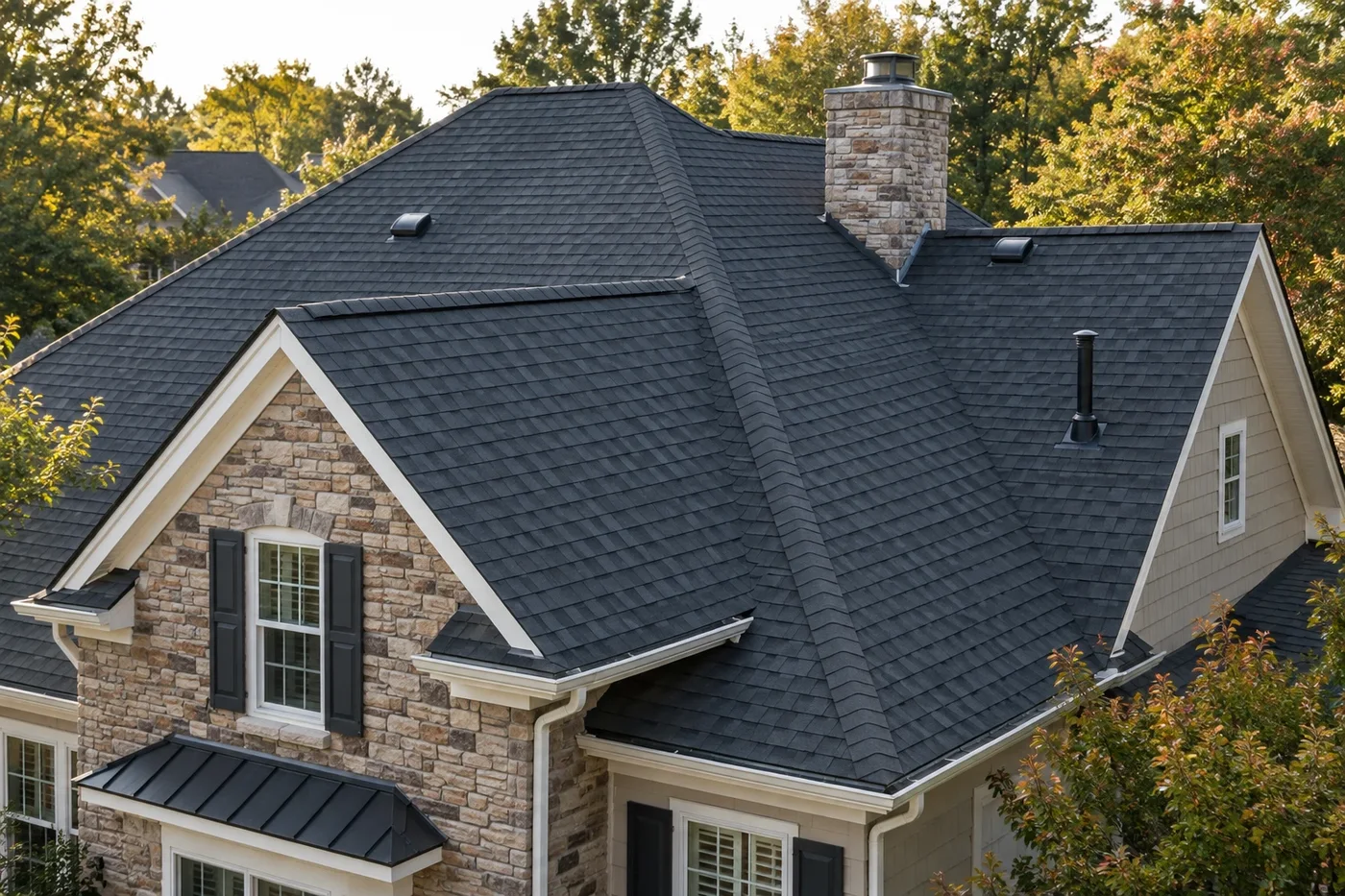
A drone is an inspection tool, not the diagnosis
Elevated images can reveal context that is easy to miss from one ladder or ground position. A complete flight path may show the relationship between a ceiling stain and an upslope chimney, valley, vent, wall transition, or roof edge. It can also document several slopes with consistent wide and close photographs without putting weight on brittle, wet, steep, or visibly damaged roofing.
That evidence is useful, but the image still needs interpretation. A dark mark may be staining, a shadow, a repair, or material loss. A raised edge may be a displaced shingle, a normal product profile, or a perspective effect. The inspector should identify what the image shows, what it does not prove, and what additional check would answer the unresolved question.
Homeowners should be cautious with any report that turns aerial photographs directly into a repair or replacement conclusion without connecting the images to the roof assembly, interior evidence, material condition, and the actual reason for the inspection.
What aerial roof images can document well
A well-planned aerial survey can capture all visible roof planes, ridges, hips, valleys, eaves, rakes, chimneys, skylights, plumbing vents, attic vents, wall transitions, gutters, and downspout discharge points. Wide images establish location. Closer images can then record missing or displaced shingles, open flashing edges, debris concentrations, prior patches, surface wear, and drainage concerns that are visible from above.
The sequence matters. One dramatic close-up without a wide location image can make a repair hard to scope later. A useful photo set moves from the whole home to the roof plane, then to the specific detail. It should preserve enough surrounding context to show where water would travel and which adjacent components belong in the repair boundary.
Aerial access can be especially useful when the roof is too steep, wet, fragile, high, obstructed, or damaged for responsible foot traffic. It can also create a baseline after replacement or repair. Those benefits do not require claiming that every defect is visible from the air.
What a camera cannot confirm by itself
A standard drone camera records surface appearance. It cannot feel movement underfoot, test whether wood is soft, check whether a fastener holds in sound decking, or determine whether a shingle can be separated without cracking. It cannot see under shingles, behind counterflashing, beneath a pipe-boot flange, or through the roof covering to the underlayment and deck.
It also cannot inspect the attic side of the assembly. Moisture may travel along decking, framing, pipes, wiring, or insulation before it appears indoors. Safe attic observations can help locate the first wet material, old staining, active moisture, ventilation conditions, daylight at openings, or a disconnected exhaust duct. None of those findings should be inferred from an exterior image alone.
Even specialized sensors need limits. Thermal patterns can point to temperature differences, but they do not identify the cause without suitable conditions and corroborating evidence. Measurement software can estimate roof geometry, but an estimate is not proof of concealed condition or a project-specific repair design.
Direct roof access is not always required or appropriate
The opposite mistake is assuming that a proper inspection always requires walking every roof plane. Foot traffic can damage brittle shingles, disturb loose material, and expose the inspector to an avoidable fall when the roof is wet, steep, unstable, icy, or affected by storm damage. Some conditions are better documented first from the ground, an eave, a window, a ladder at a safe edge, or an aerial camera.
North Carolina’s standards for licensed home inspections illustrate why the method should be disclosed: a home inspector is not required to walk the roofing. A roof-specific contractor evaluation has a different purpose, but the same practical lesson applies. The report should state how each area was viewed, which areas were inaccessible, and how those limits affect the conclusion.
When a close physical check is needed, access should be targeted. The inspector may need to examine one flashing edge, test a suspected soft area, check shingle flexibility, trace a penetration, or open a limited area with authorization. The goal is not to maximize footsteps. It is to collect the evidence needed to answer the homeowner’s question without causing new damage.
How to judge whether the inspection answered your question
Start with the reason for the visit. A post-storm survey, recurring leak, repair estimate, replacement estimate, home-purchase concern, and maintenance check do not require identical evidence. Ask the report to name the areas viewed, access methods used, limitations, observed conditions, likely next step, and any conclusion that still depends on opening concealed layers.
For a leak, the evidence should connect the interior moisture location and timing with the exterior drainage path. For a repair estimate, it should define the suspected defect, repair boundary, materials or layers expected to be opened, and process for hidden damage. For replacement planning, it should address all slopes and roof details rather than relying on a few close photos of the easiest area to reach.
If a drone is used for business, the flight is also subject to federal operating rules. The FAA says small drones flown for work generally operate under Part 107, and controlled airspace may require authorization. Weather, visibility, people, nearby aircraft, temporary restrictions, and the property layout can make a planned flight unsuitable even when aerial images would be helpful. The roof inspection should continue with the safest lawful combination of available methods rather than forcing one tool.
Kaliber Roofing serves Indian Trail first with repair-focused, photo-documented inspections and same-day or next-day availability subject to scheduling. The useful result is not a particular inspection gadget. It is a clear record that separates visible evidence from assumptions and supports the smallest responsible next step.
Related guidance
Common questions
Is a drone roof inspection accurate?
It can accurately document visible surface conditions when the camera, angle, distance, lighting, flight path, and image quality are suitable. Accuracy drops when an image is blurry, shadowed, obstructed, or interpreted without roof and interior context. Aerial evidence should be paired with other inspection methods whenever the question involves concealed layers, moisture paths, attachment, or material strength.
Does a roofer have to walk on my roof to inspect it?
Not in every situation. Roof pitch, height, moisture, material condition, visible damage, and the inspection question all affect safe access. Ground views, ladder-edge views, aerial images, attic evidence, and targeted direct access can be combined. The report should disclose the method and any areas that could not be evaluated.
Can a drone find the exact source of a roof leak?
Sometimes it can document a visible exterior defect that aligns with the moisture path, but an exterior image alone does not prove the entry point. Water can travel before it appears indoors, and the failed layer may be hidden. Rain timing, attic evidence, close inspection, and occasionally controlled diagnostic work may be needed.
Can drone photos prove hail or wind damage for insurance?
Photos can document visible conditions and location, but they do not by themselves establish cause, date of loss, repair scope, or insurance coverage. Preserve the images with the storm timeline and inspection report, then let the responsible contractor, insurer, or other qualified party make the decision within their role.
What should I receive after a roof inspection?
Ask for a report or photo set that identifies the roof areas viewed, access method, limitations, overview and detail images, observed conditions, urgency, and recommended next step. A repair recommendation should connect the proposed scope to specific evidence rather than a generic replacement pitch.
Sources and editorial notes
- FAA requirements for certificated remote pilots and business drone operations
- FAA guidance on LAANC and controlled-airspace authorization
- North Carolina Home Inspector Licensure Board standards of practice
Prepared with AI assistance and editorially reviewed by Sage. General homeowner guidance; not an on-site diagnosis, flight authorization, insurance determination, code ruling, structural conclusion, or substitute for evaluation by the appropriate qualified professional.