Black streaks on a roof in Charlotte NC are usually algae growth on asphalt shingles, not an automatic sign that the roof is failing. They show up fastest on shaded, damp roof slopes, especially where trees, humidity, and slow drying let the staining spread. The smart move is to inspect the roof before deciding whether it needs cleaning, repair, rejuvenation, or replacement.
If you have lived around Charlotte for more than a few summers, you have seen it: one roof plane looks clean, and the next has dark vertical streaks running down from the ridge. It can make a 12-year-old roof look like it is done.
Sometimes it is mostly cosmetic. Sometimes the staining is hiding a maintenance problem, old shingles, moss, lichen, or storm damage. Kaliber Roofing inspects streaked roofs across Charlotte, Huntersville, Cornelius, Matthews, Mint Hill, Indian Trail, Ballantyne, Pineville, Weddington, Stallings, Monroe, Waxhaw, Concord, Midland, and nearby areas. We look at the whole roof system first, then tell you whether roof rejuvenation, cleaning, roof repair, or replacement makes sense.
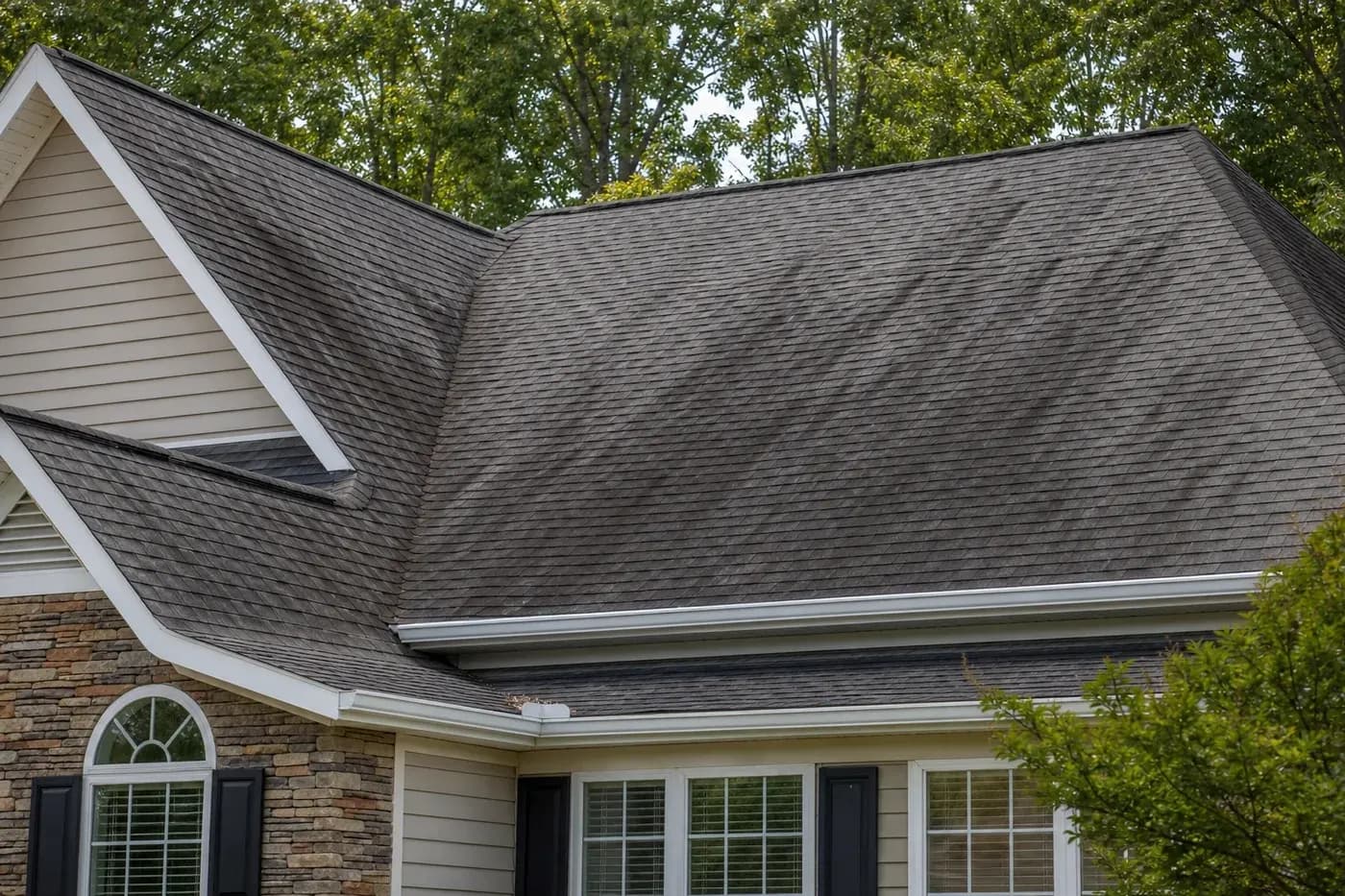
What Causes Black Streaks on Roof Shingles?
Most dark roof streaks are caused by algae-like growth that settles on shingles and spreads over time. The name homeowners hear most often is Gloeocapsa magma. It is carried by air, it likes moisture, and it can create dark pigment that looks almost black from the ground.
On asphalt shingles, the streaking often follows the water path down the roof. That is why it looks like long vertical staining instead of a random dirt smear. It usually starts small, then becomes more obvious after several humid seasons.
Here is the part people miss: staining is not the same thing as a leak. A roof can have black streaks and still be watertight. But a stained roof can also have unrelated issues underneath, especially if it is older or has been through hail, wind, falling limbs, or years of deferred maintenance.
That is why you should not diagnose a roof from curb appeal alone. A clean-looking roof can be worn out. A streaked roof can still have years left. The inspection tells the truth.
Why Do Charlotte Roofs Get Black Streaks So Often?
Charlotte gives roof algae a comfortable setup: warm weather, high humidity, heavy summer rain, shaded lots, mature trees, and long stretches where a roof never fully dries before the next damp morning. North-facing slopes usually show staining first because they get less direct sun.
Neighborhoods with tree cover in Matthews, Mint Hill, Weddington, Waxhaw, Cornelius, and Huntersville can see this faster. Leaves hold moisture in valleys. Branches shade roof planes. Pollen and organic debris give growth something to settle into. Not dramatic. Just steady.
The same roof may age differently from one slope to another. A south-facing front plane in Ballantyne might bake in afternoon sun while the back slope stays shaded by trees. One side looks fine. The other side streaks, grows moss near the gutter, and collects granules faster. Same house, different microclimate.
That local pattern is one reason Kaliber checks the full roof, not just the stained area. We want to know whether the discoloration is isolated surface growth or part of a bigger maintenance pattern.
Do Black Streaks Damage Shingles?
Black streaks are often more of an appearance issue than an immediate structural failure. Still, they should not be ignored forever. Dark staining can absorb heat, hold moisture longer, and make it harder to see what is really happening on the roof surface.
Moss and lichen are more concerning than flat streaking. Moss can lift shingle edges and keep water trapped against the roof. Lichen can attach tightly to granules. If you see thick green growth, crusty white or gray patches, lifted shingles, or heavy granule loss below the stained area, the conversation changes.
Age matters too. A newer algae-streaked roof may simply need monitoring or roof-safe cleaning. A 20-year-old roof with black streaks, brittle shingles, nail pops, exposed fiberglass, and recurring leaks is not just dirty. It may be reaching the end of its life.
Look, streaks do not write the whole report. They are one clue. The roof's age, ventilation, granule condition, flashing, storm history, and leak history all have to be read together.
Should You Clean the Roof or Get It Inspected First?
If the roof is fairly new, not leaking, and the streaking is the only concern, roof-safe cleaning may be enough. That means low pressure and a method designed for asphalt shingles. It does not mean blasting the roof with a pressure washer.
If the roof is older, recently storm damaged, shedding granules, growing moss, or showing stains inside the house, get an inspection first. Cleaning can make the roof look better, but it will not fix bad flashing, loose shingles, soft decking, or a leak around a pipe boot.
Kaliber's inspection is built around documentation. We check the stained slopes, roof penetrations, valleys, ridge, flashing, gutters, attic clues when available, and the general condition of the shingle system. From there, the answer might be simple cleaning, maintenance, storm damage documentation, a small repair, or a longer-term roof replacement conversation.
That order matters. Inspect first when there is any doubt. Then spend money on the right fix.
What Mistakes Should Homeowners Avoid?
The first mistake is pressure washing shingles. High pressure can strip protective granules, open shingle edges, force water under laps, and create damage that was not there before. A roof is not a driveway.
The second mistake is assuming a streaked roof needs replacement. Some companies love that conversation because it is easy to scare homeowners with a dark roof photo. Streaking alone is not proof. A proper recommendation should show shingle condition, not just color.
The third mistake is ignoring moss or lichen because the roof is not leaking yet. Flat black algae streaks are one thing. Raised organic growth is another. Anything that traps water or lifts shingle edges deserves a closer look.
And the fourth mistake is waiting until the roof leak shows up inside. By then, the problem may have already reached decking, insulation, ceiling drywall, or trim. If you are already wondering whether the roof is just stained or actually worn out, that is the moment to inspect it.
Not sure if the roof is dirty, damaged, or aging out?
Request a Free InspectionWhen Should You Call Kaliber Roofing?
Call when the streaking is paired with anything else: missing shingles, lifted shingles, granules in the gutters, a ceiling stain, moss, lichen, soft-looking roof areas, sagging, recent hail, wind damage, or a roof that is already past the 15-year mark. Those signs deserve more than a cleaning quote.
You should also call before listing a home, buying a home, filing an insurance claim, or paying for roof washing on an older roof. A quick inspection can prevent you from cleaning a roof that actually needs repair, or replacing a roof that only needed maintenance.
Kaliber Roofing serves Charlotte and the surrounding NC communities with repair-first roof inspections. That means we do not treat every streak as a sales opportunity. If cleaning or monitoring is the reasonable answer, we will say that. If repair or replacement is the better call, we will show you why with photos.
Black streaks are common here. Guessing is optional.
Frequently Asked Questions
What are the black streaks on my roof in Charlotte NC?
Black streaks on Charlotte roofs are usually algae or cyanobacteria growth on asphalt shingles. They are common in warm, humid areas with shade, tree cover, and roof slopes that stay damp after rain or morning dew.
Do black streaks mean I need a new roof?
Not usually. Black streaks alone do not automatically mean the roof needs replacement. Age, brittle shingles, granule loss, leaks, soft decking, moss, lichen, and storm damage matter more than staining by itself.
Can I pressure wash black streaks off shingles?
No. High-pressure washing can strip granules, loosen shingles, force water under the roof system, and shorten roof life. Asphalt shingle roofs should be evaluated carefully and cleaned only with roof-safe low-pressure methods.
Are black streaks worse on north-facing roof slopes?
Yes. North-facing and shaded roof slopes often dry slower, so algae streaks can show up there first. Tree cover, clogged valleys, nearby shade, and humid Charlotte weather can make the pattern more noticeable.
When should Kaliber inspect a streaked roof?
Schedule an inspection if the roof is older, the streaks come with missing shingles, granule loss, moss, lichen, leaks, soft spots, storm damage, or you are not sure whether cleaning or repair is the smarter move.
Does Kaliber inspect streaked roofs outside Charlotte?
Yes. Kaliber Roofing inspects roofs in Charlotte, Huntersville, Cornelius, Matthews, Mint Hill, Indian Trail, Ballantyne, Pineville, Weddington, Stallings, Monroe, Waxhaw, Concord, Midland, and nearby communities.
Want a straight answer on those black roof streaks?
Kaliber Roofing will inspect the roof, document what we find, and explain whether cleaning, repair, rejuvenation, or replacement makes sense.